
Human Design Guide for Beginners
Human Design Guide for Beginners helps you understand your chart in a clear order so the system feels simple, useful, and easier to apply.
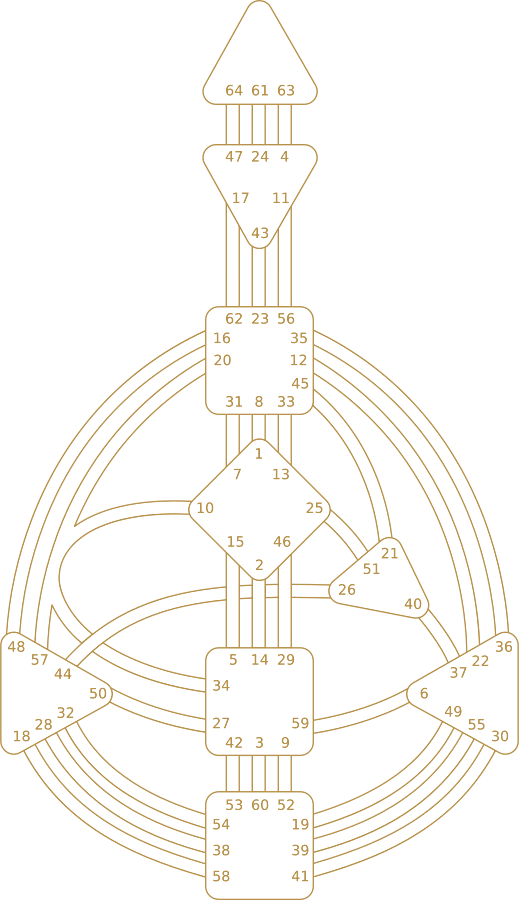
Use it as the map of the whole system: all 5 Types, 8 Authorities, 9 Centers, 12 Profiles, 36 Channels and 64 Gates, grouped the way Human Design groups them, each linked to its own page. Think of it as the index at the back of a book.
On this page: how to use this guide, the foundation, every layer of the chart in lists you can open, the deeper topics and compatibility.
New to Human Design? Read What is Human Design for what the system is, then Human Design Basics for the first lesson. Come back here when you want to look something up in your own chart.
This page is the master Human Design hub: every page on this site about the system, in one place. Get your free chart first, so you can find yourself in the lists.
Human Design Guide for Beginners: How to Use It
This guide is for finding things. Pick the line that fits where you are.
Foundation: Types, Strategy and Authority
Every chart starts here. Your Type sets your Strategy, and your Authority is how you decide. Open a list to see all of them.
The 5 TypesStrategy, Signature, Not-Self
Human Design Types · Human Design Strategy · Signatures · Not-Self Theme
The 8 AuthoritiesHow each one decides
A defined Solar Plexus is always the Authority; without one, the Sacral; then the Spleen, and so on. Human Design Authority
Read your chart more deeply
Every other layer of the chart, each listed in full and linked to its own page. Open a list to find yours. Want it written out for your own chart instead? That is what a Human Design reading does.
The 9 CentersWhat each one does
The 12 ProfilesAnd the six lines
- 1/3 Investigator / Martyr
- 1/4 Investigator / Opportunist
- 2/4 Hermit / Opportunist
- 2/5 Hermit / Heretic
- 3/5 Martyr / Heretic
- 3/6 Martyr / Role Model
- 4/1 Opportunist / Investigator
- 4/6 Opportunist / Role Model
- 5/1 Heretic / Investigator
- 5/2 Heretic / Hermit
- 6/2 Role Model / Hermit
- 6/3 Role Model / Martyr
Six lines: 1 Investigator, 2 Hermit, 3 Martyr, 4 Opportunist, 5 Heretic, 6 Role Model. Human Design Profiles
The 5 DefinitionsHow your Centers connect
The 36 ChannelsBy circuit
Individual Circuit, 15 Channels
- 1-8 Inspiration
- 2-14 The Beat
- 3-60 Mutation
- 10-20 Awakening
- 10-34 Exploration
- 10-57 Perfected Form
- 12-22 Openness
- 20-34 Charisma
- 20-57 The Brainwave
- 23-43 Structuring
- 24-61 Awareness
- 25-51 Initiation
- 28-38 Struggle
- 34-57 Power
- 39-55 Emoting
Collective Circuit, 14 Channels
- 4-63 Logic
- 5-15 Rhythm
- 7-31 The Alpha
- 9-52 Concentration
- 11-56 Curiosity
- 13-33 The Prodigal
- 16-48 The Wavelength
- 17-62 Acceptance
- 18-58 Judgment
- 29-46 Discovery
- 30-41 Recognition
- 35-36 Transitoriness
- 42-53 Maturation
- 47-64 Abstraction
Tribal Circuit, 7 Channels
The 64 GatesBy Center
Head Center, 3 Gates
Ajna Center, 6 Gates
Throat Center, 11 Gates
- 8 Contribution
- 12 Caution
- 16 Skills
- 20 The Now
- 23 Assimilation
- 31 Influence
- 33 Privacy
- 35 Change
- 45 The Gatherer
- 56 Stimulation
- 62 Details
G Center, 8 Gates
- 1 Self-Expression
- 2 The Direction of the Self
- 7 The Role of the Self in Interaction
- 10 The Behavior of the Self
- 13 The Listener
- 15 Extremes
- 25 The Spirit of the Self
- 46 The Determination of the Self
Heart Center, 4 Gates
Solar Plexus Center, 7 Gates
Sacral Center, 9 Gates
- 3 Ordering
- 5 Fixed Rhythms
- 9 Focus
- 14 Power Skills
- 27 Caring
- 29 Saying Yes
- 34 Power
- 42 Growth
- 59 Sexuality
Spleen Center, 7 Gates
Root Center, 9 Gates
Incarnation CrossesThe three angles
192 Incarnation Crosses in all, each made of the four Sun and Earth Gates. What is the Incarnation Cross
Reading the chart itselfSymbols and meaning
Go deeper into your design
Beyond the main layers: the Variables (Environment and Digestion), the planets that activate your Gates, the Signature and Not-Self feedback loop, and the wiring between Centers.
Environment
Your environment shows where your energy functions best and how your surroundings support your alignment.
Digestion
Digestion, also called Determination, is one of the four Variables: the way you are designed to take things in.
Planets
Planets in Human Design represent different archetypal influences that activate your Gates and shape your patterns and life themes.
Signatures
Your Signature shows what alignment feels like for your Type: Peace, Satisfaction, Success, or Surprise.
Not-Self Theme
Your Not-Self Theme shows what misalignment feels like: Anger, Frustration, Bitterness, or Disappointment. Together with your Signature, it creates the clearest feedback loop in Human Design.
Circuitry
The 36 Channels fall into three circuits, Individual, Collective and Tribal, which show who your energy is here to serve.
Hanging Gates
An active Gate whose partner at the other end of its Channel is not active in your chart. Others can complete it.
Compatibility: understand relationship dynamics
Human Design compatibility helps you understand how two charts interact in romance, friendship, family, and work. The goal is awareness, not labeling a relationship as perfect or broken.
The clearest way to approach compatibility is to understand each person's Type, Strategy, and Authority first, then explore the pair page that matches the relationship.
All Human Design compatibility pair pages
Below are the 15 unique Human Design compatibility pairings. One page covers both search directions for the same pairing.
Quick recap: this guide is the map. Learn what the system is on What is Human Design and the first lesson on Human Design Basics, get your free chart, then use the lists above to find each part of your own design.
FAQ: Human Design Guide
What is this Human Design guide?
This Human Design guide is a structured learning hub that helps you understand the system step by step from beginner basics to deeper chart interpretation, compatibility, and personalized readings.
How many Gates, Channels and Centers are there in Human Design?
There are 64 Gates, 36 Channels and 9 Centers. Every chart has all of them in the same places. What differs from one person to the next is which Gates are active, which Channels are complete and which Centers are defined.
Do I need to read every page in order?
No. But following the recommended path helps Human Design feel much clearer and more practical instead of overwhelming.
What is the fastest way to understand my chart?
The fastest way is to generate your chart first, then use this guide to learn the foundational pages in the right order.
Where should I start with compatibility?
Start with the compatibility calculator, identify each person's Type, Strategy, and Authority, then read the matching relationship pair page.
Do I need a reading to use this guide?
No. Your free chart and the guides are enough to start learning. A personalized reading is optional if you want a more structured interpretation of your full chart.
What is the difference between a free chart and a full reading?
Your free chart shows your map. A full reading explains what every part of your chart means in the context of your exact design, covering 60+ sections from Type through Gates, Channels, and planetary activations.
What are the Authorities in Human Design?
There are eight: Emotional, Sacral, Splenic, Ego Manifested, Ego Projected, Self-Projected, Mental and Lunar. Your chart has one, set by which Centers are defined. A defined Solar Plexus is always the Authority when it is there.