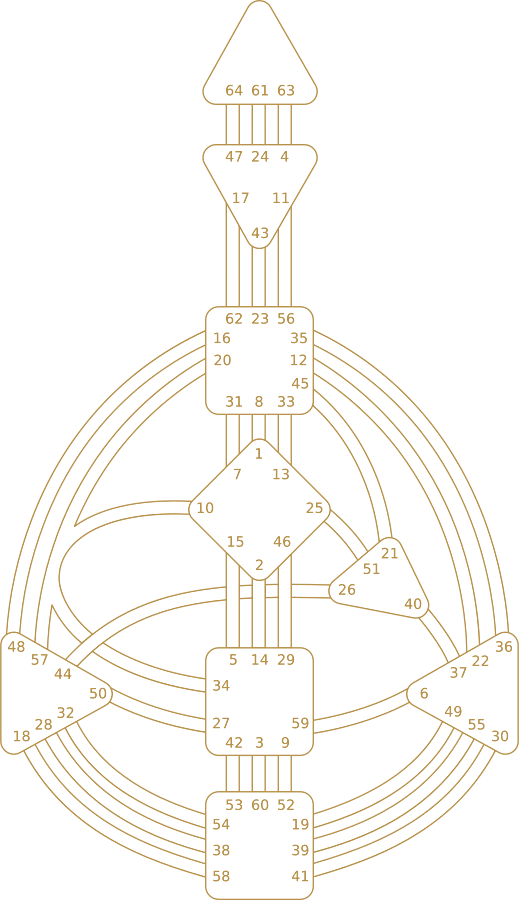

Generator Strategy Human Design
The Generator strategy in Human Design is to respond. This means your energy works best when you let life present something real, notice your body's reaction, and move from that signal rather than forcing direction from the mind. Followed, it brings Satisfaction. Overridden, it brings Frustration.
Think of your defined Sacral as a powerful motor that switches on from response, not from willpower. When it is correctly engaged, even hard work feels like a challenging workout that leaves you tired but fulfilled.
Not sure you are a Generator? Check with the free chart calculator on this page. It takes your birth date, time and place.
Generator Strategy at a glance
The facts of Generator Strategy in one place, from the Human Design canon.
Are you a Generator? Find your Strategy in your chart
Your Strategy comes from your Type, and your Type is calculated from your birth date, birth time and birth place. Enter your details and your free chart shows your Type, Strategy and Authority.
Your chart shows a different Type? Each Strategy has its own guide:
What is Generator strategy?
Generator strategy is the principle that your energy is designed to engage with what is already present rather than what the mind decides to chase. The word "respond" does not mean react without thinking. It means your movement through life starts with an external prompt, something real that your body can say yes or no to, rather than an internal mental agenda about what you should be doing.
This matters because Generators have a defined Sacral Center, a motor that can sustain energy for long periods when it is engaged correctly. The Sacral does not activate from mental willpower. It activates from response. When something real appears and your body says yes, your energy becomes consistent, focused, and deeply productive. When you force engagement through mental pressure, the energy feels hollow and unsatisfying.
The strategy is not about being passive. It is about being precise. You stay active and stay in environments where things are happening, then use your body's response as a filter for which of the many things showing up are actually correct for your energy. For the full picture of Generator energy, see the Generator Type page.
The sequence: something real shows up → your body responds with a yes or no → you confirm through your Authority → you act. Every section below shows how to apply it.
What counts as a response?
A response happens when something external gives your body a concrete signal to react to. It can be a question someone asks you, a job posting, a project that lands in your inbox, or a problem that makes your energy surge. The common thread is that the stimulus comes from outside your mental planning and gives your Sacral something tangible to answer.
What does not count is the mind generating an idea and then trying to force the body to get excited about it. Mental enthusiasm lives in the head and often fades within hours or days. Sacral response lives in the gut and stays consistent as long as the engagement is correct.
So put yourself where prompts are abundant: events, conversations, books, job boards, a new neighborhood. The more real stimuli you meet, the more your response has to work with. It also helps to frame decisions as yes-or-no questions. Instead of "What should I do about my career?", try "Does my body have energy for applying to this specific job?" The binary format gives your Sacral a clear signal, and the response becomes much easier to notice.
Response vs initiation: the core distinction
The most important concept in Generator strategy is the difference between responding and initiating, because they feel different in the body and produce different outcomes in your life.
Responding feels like engagement. Something shows up, your body reacts, and the energy flows naturally toward action. There is a sense of pull, curiosity, or readiness that does not require willpower to sustain. You may still be working hard, but the work feels more like momentum than effort.
Initiating feels like pushing. Nothing external prompted the action. The mind decided this was the right thing to do, and now you are using willpower to generate the energy for it, often with an urgency that says the window will close if you do not act right now. The tricky part is that initiation can look productive in the short term. Generators have enough raw energy to push through almost anything for a while. But if the Sacral never said yes, the energy eventually drains, the frustration builds, and you either quit or continue with resentment. Response produces sustainable engagement. Initiation produces temporary output followed by exhaustion.
A simple check in the moment: "Did something outside of me prompt this action, or did I mentally decide to do it?" If something real prompted it and your body feels engaged, you are responding. If your mind manufactured the urgency and your body feels dragged along, you are likely initiating.
How Generator strategy works with Authority
Strategy and Authority are a two-step system. Strategy brings the opportunity to your awareness through response. Authority decides whether it is correct for you to commit. Responding without checking Authority leads to overcommitment, and using Authority without response leads to mental decision-making that bypasses the Sacral. Generators have one of two Authorities, and your free chart shows which one is yours.
Sacral Authority
With Sacral Authority, your decision-making is designed to be immediate. Your body responds in the moment with a yes or no, and that first response is your truth: fast, physical, and pre-verbal. Your job is to catch it before the mind starts negotiating, and if you are unsure, the answer is usually to wait. Learn more on the Sacral Authority page.
Emotional Authority
With Emotional Authority, the response mechanism works the same way, but your clarity comes over time as your emotional wave moves through its cycle. You are not designed to commit in the moment, even when the Sacral response feels strong. Do not commit at the peak of excitement or dismiss at the low of doubt; wait until the wave settles and check whether the yes is still there. Learn more on the Emotional Authority page.
What response looks like in daily life
Response is not a once-in-a-while practice for big decisions. It is a constant way of engaging with your day. In the morning, it means noticing what your body has energy for rather than forcing a rigid routine. This is not about being unstructured. It is about sequencing your day around Sacral engagement rather than mental discipline. For the Generator version of this, day by day, see daily alignment guidance by Type.
With commitments, response means pausing before you say yes. When someone asks for your time or help, notice your body's first reaction before your mind starts calculating the social cost of saying no. Many Generators say yes automatically because they have the energy to do almost anything, and they confuse availability with alignment.
With ideas, response means letting the idea meet reality before you invest: share it, look for demand, test a small version, then check whether your energy stays engaged or fades. Over time this creates a natural rhythm of respond, act, observe, refine. Each step is confirmed by the body rather than forced by the mind, so the direction can adjust as new information appears.
Generator strategy at work
Work is where Generator strategy has the most visible impact. A Generator doing tasks their Sacral said yes to can sustain focus and energy for hours. A Generator forcing the wrong work, or doing the right work from mental pressure, will feel drained and stuck even if the output looks fine on paper. The most common trap is taking on assignments or entire career paths because they seem logical, profitable, or expected, without checking whether the body actually has energy for them.
Applying response at work does not mean refusing every task that is not thrilling. Within any job, there are tasks that light you up and tasks that feel heavy. Response helps you tell them apart so you can, over time, move toward more of what engages your Sacral, whether that means negotiating your role, shifting responsibilities, or choosing different work.
When a new project appears, pause before volunteering and check for a genuine pull. Committing only where the yes is real makes you more effective, because the work you take on gets your full Sacral energy rather than a diluted version spread across too many obligations.
Generator strategy in relationships
In relationships, response protects both your energy and your boundaries. The healthiest dynamic for a Generator is one where you respond to what is real, clear requests, clear questions, genuine invitations, rather than guessing what someone needs and overextending yourself to provide it.
A common pattern is initiating care that was never asked for: jumping in to fix a partner's stress or anticipating what a friend needs. It looks generous, but when the Sacral did not respond to a real request, the giving often comes from obligation, and resentment builds underneath. Response means waiting for the ask. That is not being cold. It is trusting that when someone needs your energy, they will ask, and your Sacral will give you a clean yes or no.
The same goes for communication. When your partner shares a problem, listen first and check whether they are asking for your input. If they do not ask, offering it anyway can create friction rather than connection. To see how Generator energy meets other Types, use the Human Design Compatibility Calculator or read about Human Design Relationships.
Common Generator strategy mistakes
Knowing these patterns helps you catch yourself faster when you drift away from response.
Initiating from pressure
Acting because you feel behind, anxious, or like you should be doing something, not because something real showed up and your body said yes.
Saying yes too fast
Committing before checking your response or Authority. This is especially common for Generators who are conditioned to be helpful and available.
Overthinking past the response
Your body gave a clear signal, but your mind starts building a case for the opposite. The first response is usually more reliable than the tenth mental revision.
Confusing mental excitement with Sacral response
An idea sounds exciting in your head, but your body is flat. Mental excitement fades. Sacral engagement sustains.
Staying too long after the response changes
Your Sacral said yes once, but the energy has shifted. Staying out of obligation or sunk cost creates the frustration of a commitment that is no longer correct.
Interpreting response as passive waiting
Sitting at home hoping life delivers is not strategy. Response requires exposure to environments and people so your Sacral has things to react to.
Frustration as feedback: what it means and what to do
The Generator's Not-Self Theme is frustration. It is not a sign that something is wrong with you. It is a signal that your strategy is off somewhere: you are initiating where you should be responding, committing to things your Sacral did not endorse, or staying in situations that are no longer correct.
When frustration shows up, pause and stop pushing. Look at what you are spending your energy on and ask honestly: "Did my body say yes to this, or did my mind decide it was the right thing to do?" The commitments in the second category are usually the ones creating the frustration, and renegotiating, releasing, or reframing them is how you move back toward satisfaction.
The Generator's Signature is satisfaction, and it does not mean everything is easy. It means your energy is being used on what is correct. The work might be hard and the project complex, but the underlying engagement feels right, and the day ends with a sense of fulfillment rather than depletion.
Next steps
Generator strategy is the how of your energy, and your Authority is the how of your decisions. Go deeper with the Generator Type page, your Authority on the Sacral Authority or Emotional Authority page, the Signatures and Not-Self Theme guides, and the Human Design Strategy overview of all five Types.
A Human Design reading goes further, with 60+ sections on how your Sacral energy, Authority, Centers, Gates and Channels shape your response patterns, timing, and decisions.
FAQ: Generator Strategy Human Design
What is Generator strategy in Human Design?
The Generator strategy is to respond. Life presents prompts such as questions, opportunities, and requests, and you move after your body responds rather than initiating from mental pressure.
What does strategy to respond mean in Human Design?
To respond is the Generator Strategy (Manifesting Generators respond too, then inform before acting). It is often phrased as "wait to respond": you let something real appear first, then follow your Sacral's yes or no instead of starting things from the mind.
What does to respond actually mean?
It means your action starts after something external appears. You feel a bodily yes or no, then act from that energy and confirm timing through your Authority.
Is responding the same as being passive?
No. Responding is active. You stay engaged with life and in places where things are happening, and you take action when a real prompt is present.
How do I find my Strategy in Human Design?
Your free chart shows your Type and Strategy. Enter your birth date, time and place in the calculator on this page; if your Type is Generator, your Strategy is to respond.
How do I know if I have Sacral or Emotional Authority?
Your free chart shows your Authority. Generate your chart, then read the Sacral Authority or Emotional Authority page to understand how your decision-making works.
What happens if I do not follow Generator strategy?
Most Generators feel frustration. It signals you initiated, overcommitted, or pushed without a true response. The reset is to pause and return to response plus Authority.
Can Generators still have goals?
Yes. The difference is approaching them through response rather than force, letting each step reveal itself through Sacral engagement rather than mental planning alone.
What is the difference between Generator and Manifesting Generator strategy?
Both respond first. Manifesting Generators add an informing step after the response, communicating their move to the people affected before taking action. The response mechanics are the same.
How long does it take to see results from following Generator strategy?
It is an experiment, not a switch. The more consistently you check your response before committing, the more correct commitments replace forced ones, and frustration gives way to satisfaction.