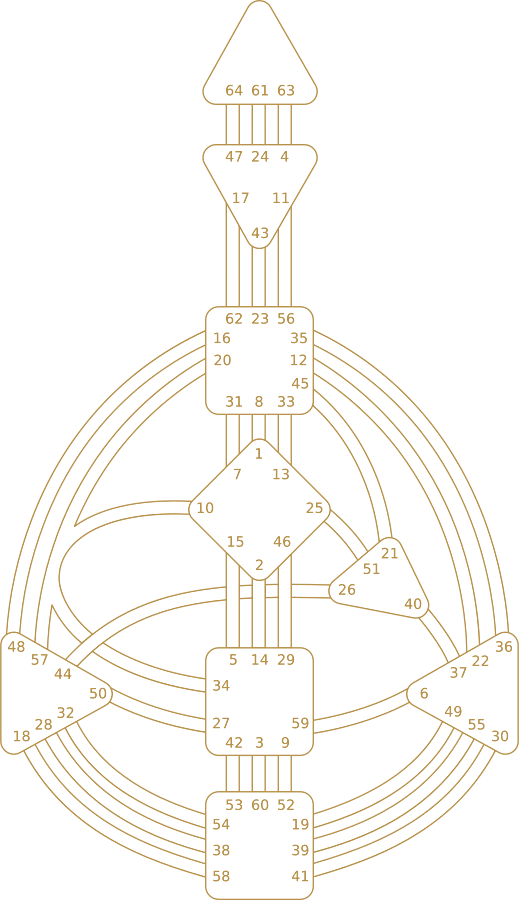

Manifestor Strategy Human Design
The Manifestor strategy in Human Design is to inform. You are designed to initiate on your own, and before you move, you tell the people your action will affect. Informing is not asking permission. It reduces resistance so your initiating energy can move freely.
Think of informing as a turn signal: it does not ask the other drivers for permission to change lanes, it simply lets them adjust before you move.
Not sure you are a Manifestor? Check with the free chart calculator on this page. It takes your birth date, time and place.
Manifestor Strategy at a glance
The facts of Manifestor Strategy in one place, from the Human Design canon.
Are you a Manifestor? Find your Strategy in your chart
Your Strategy comes from your Type, and your Type is calculated from your birth date, birth time and birth place. Enter your details and your free chart shows your Type, Strategy and Authority.
Your chart shows a different Type? Each Strategy has its own guide:
What is Manifestor strategy?
Manifestor strategy is built around one principle: inform before you act. Unlike Generators, who are designed to respond to what life presents, Manifestors are designed to initiate independently. You have a motor Center connected to the Throat and no defined Sacral, which gives you the capacity to start things, create movement, and set new directions without needing an external trigger. Your energy moves from an internal urge.
When a Manifestor acts on that urge without communicating, the people around them experience the action as sudden and sometimes threatening. This is not because the action is wrong. Your closed and repelling aura creates a natural boundary that makes your movements feel impactful, even jarring, to others. Informing bridges this gap. It gives the people affected enough context to adjust rather than resist.
What informing is not: asking for permission, waiting for approval, explaining yourself in detail, or seeking consensus. It is a simple, direct statement: "Here is what I am about to do." It takes thirty seconds and does not invite negotiation. The irony most Manifestors eventually discover is that informing, which feels like it limits freedom, is actually what protects it.
The sequence: urge arises → Authority confirms it is correct → inform the people affected → act. Every section below explains how to apply it.
Why Manifestors resist informing
Most Manifestors have a visceral resistance to informing, and it is often rooted in childhood conditioning. Manifestor children are powerful, independent, and naturally inclined to act without asking. The adults around them, not understanding the design, tried to control and contain that energy. After years of being told to ask first and explain yourself, most Manifestors link communication with loss of freedom.
This is why informing feels like asking permission even when it is not. The old wiring says: "If I tell them what I am doing, they will try to stop me." In adult life the dynamic is different. You are not asking a parent for permission. You are giving a colleague, partner, or friend a heads-up so they can adjust.
The other reason is that informing feels unnecessary. You have already decided, you know it is correct, and your energy is surging. Stopping to tell someone feels like a pointless delay. But those thirty seconds can prevent hours of conflict and cleanup. Many Manifestors find informing is easier in practice than it sounds, and it usually means less pushback, less anger and more freedom.
How to inform in practice
Effective informing is simple, direct, and brief. The format is straightforward: "I am going to [action]." If the action affects someone's plans, add: "This means [impact]." If timing matters, add: "Starting [when]." You do not need to justify why or wait for approval. You are closing the information gap so your action does not arrive as a surprise.
Who you inform depends on who is affected. Changing plans that involve your partner means informing your partner. Shifting direction on a work project means informing your team. If no one else's plans change because of your action, you do not need to inform anyone. The strategy is about the people who will be impacted, not about broadcasting every move.
Timing matters most. Inform before you act, not during or after. Telling someone what you did after the fact creates almost as much resistance as not informing at all, because they still experienced the action as unexpected. The medium does not matter: a text, an email, or a quick message works, as long as the information reaches the right person before your action does.
How Manifestor strategy works with Authority
Strategy and Authority are a two-step system for Manifestors: Authority decides what is correct to initiate, and informing reduces resistance when you act. Authority comes first. If you inform before checking with it, you may announce an action that is not actually correct for you. Manifestors have one of three Authorities, and each changes when you are ready to inform and act. See the Authority guide for the full system.
Emotional Authority
Your clarity comes over time as your emotional wave moves through its cycle. The urge to initiate may be strong, but your Authority says to wait until the wave settles before committing: feel the urge, ride the wave, reach clarity, inform, then act. Actions initiated from emotional clarity create far less cleanup than ones initiated from the peak or the low. Learn more on the Emotional Authority page.
Splenic Authority
Your clarity arrives in the moment as a quiet, intuitive hit. The Spleen speaks once and does not repeat, so the sequence can be very fast: the urge arises, the Spleen confirms it, you inform, and you act. This speed is correct for your design but can look impulsive to others, which is exactly why the heads-up matters. Learn more on the Splenic Authority page.
Ego Manifested Authority
Your clarity comes from willpower and genuine desire. The question is direct: "Do I want this? Is my will behind it?" If the answer is yes, the initiation is correct, and you inform, then act. The key distinction is between true will and a mental should: your Ego Authority only endorses what you actually want. Learn more on the Ego Authority page.
What informing looks like in daily life
Informing is not reserved for major decisions. It is a daily habit, and the more consistently you practice it, the less resistance you meet. With plans, it sounds like: "I am going out tonight. I will be back around ten." No discussion or approval needed, just enough information for the other person to adjust their expectations. For the Manifestor version of this, day by day, see daily alignment guidance by Type.
With changes, it sounds like: "I have decided to change direction on this project. The new plan is this." A change from a Manifestor can affect several people's plans and workloads, so informing first gives everyone time to adjust rather than scramble.
With boundaries, it sounds like: "I need space tonight. I am going to be alone." Manifestors need solitude to recharge, and others often read that need as rejection. Saying it clearly creates space without creating hurt.
Manifestor strategy at work
Manifestors thrive in work environments that give them autonomy to initiate, trust to make decisions, and freedom to work on their own timeline. When the environment supports this, you become a catalyst: starting projects, setting directions, and creating momentum others can build on. A Manifestor leader who moves without informing creates chaos; one who informs before acting creates decisive momentum.
The most common work trap is a cycle: you act on what needs to happen, people react because they were not told, and then they try to rein you in or you pull further away. Informing breaks this cycle at the source. Inform your team before you shift direction, tell colleagues when you need focused time instead of going silent, and tell people before a decision affects their work.
Be honest about your energy rhythm, too. You are designed for bursts of initiating energy followed by rest, not eight hours of steady output. Telling your team "I do my best work in focused bursts" is itself an act of strategy, so your natural rhythm is not misread as inconsistency.
Manifestor strategy in relationships
Relationships are where uninformed movement causes the most damage, because the stakes are personal. When you change plans or decisions without telling your partner, family, or close friends, they do not just feel surprised. They feel excluded, and repeated exclusion creates the resentment and control dynamics Manifestors find most suffocating.
The most important practice is informing your partner before acting, even when the action seems minor: "I am going to work late tonight." "I am changing our weekend plans." Partners of Manifestors often say the most hurtful thing is not the action but feeling invisible in the decision. The same goes for solitude: "I need some time alone tonight, it is not about you" turns a hurtful disappearance into a boundary both people can respect.
Informing also applies to good news. Sharing your plans, ideas, and vision keeps the people you love included even when you are not asking for input. For how Manifestor energy meets other Types, use the Human Design Compatibility Calculator or read about Human Design Relationships.
Common Manifestor strategy mistakes
Acting before Authority confirms
The urge to initiate is strong, but not every urge is correct. Moving before your Authority has confirmed the decision often creates rework, regret, and self-inflicted resistance.
Skipping informing because it feels like permission
The conditioning that equates communication with control runs deep. But adult informing is not asking. It is a thirty-second heads-up that prevents hours of conflict.
Informing too late
Telling someone what you did after the fact creates almost as much resistance as not informing at all. Inform before you act, not during or after.
Over-explaining to justify
Informing does not require a defense of your decision. Keep it simple: what you are doing, when, and how it affects them. Justification invites debate.
Forcing constant output
Manifestors work in bursts, not steady streams. Trying to keep up a Generator's consistency leads to depletion and anger. Inform people about your rhythm so they can adjust.
Using anger as an excuse to stop informing
When resistance builds because you skipped informing, anger can make you want to withdraw further. The fix is more informing, not less.
Anger as feedback: what it means and what to do
The Manifestor's Not-Self Theme is anger. It tells you that your freedom or your initiating energy has been blocked somewhere. It does not mean you are doing something wrong. It means something in your situation is creating resistance that needs to be addressed.
The most common source is uninformed movement that has generated pushback. You acted without telling anyone, they resisted, and now you feel blocked. The fastest resolution is usually to go back, explain what happened, and inform before your next move. The other source is environmental: a role, relationship, or living situation that structurally prevents you from initiating. Then the anger is telling you the environment itself is not correct for your design, and no amount of informing will fix that.
The opposite of anger is your Signature, peace. For a Manifestor, peace does not mean passive calm. It means the absence of unnecessary resistance: you initiate from Authority, inform clearly, and your actions meet the world without friction. You feel free, decisive, and powerful without the combative edge that anger produces.
Next steps
Manifestor strategy is the how of your movement, and your Authority is the how of your decisions. Go deeper on the Manifestor Type page, then read the Authority that matches your chart: Emotional, Splenic, or Ego. See how Peace and Anger work for every Type in Signatures and the Not-Self Theme, or compare all five in the Strategy guide.
A Human Design reading goes further, with 60+ sections on how your Authority, Centers, Gates, and Channels shape your initiation, timing, and relationships.
FAQ: Manifestor Strategy Human Design
What is Manifestor strategy in Human Design?
The Manifestor strategy is to inform before you act. Manifestors are designed to initiate, and informing reduces resistance from the people impacted by your actions.
Does informing mean asking permission?
No. Informing is not permission. It is a brief communication about what you are doing, how it affects others, and when it is happening, so you can move with less pushback.
When should a Manifestor inform?
Before you act, not during or after. Inform the people who will be impacted by your decision, which may include partners, family, coworkers, or clients depending on context.
What happens if a Manifestor does not inform?
People often resist because they feel blindsided or excluded. Over time, the resistance their uninformed actions create tends to show up as anger, the Manifestor Not-Self Theme.
How do Manifestors know what to initiate?
Use your Authority (Emotional, Splenic, or Ego Manifested) to confirm what is correct to initiate. The urge comes first, but Authority decides whether to act on it.
Why do Manifestors resist informing?
Most Manifestors were conditioned in childhood to associate communication with loss of freedom. Informing feels like asking permission because of that early conditioning, even though adult informing is fundamentally different.
What is the difference between Manifestor and Generator strategy?
Generators are designed to respond to what life presents. Manifestors are designed to initiate independently and inform the people affected. Generators wait for the prompt. Manifestors create the prompt.
What does peace feel like for a Manifestor?
Peace is the absence of unnecessary resistance. You are initiating from Authority, informing clearly, and your actions are meeting the world without friction. It feels like freedom without the combative edge of anger.
How do I find my Strategy in Human Design?
Your Strategy follows from your Type, and both are shown on your Human Design chart. Enter your birth date, time and place in the free chart calculator to see whether you are a Manifestor and which Authority you have.