
Emotional Authority Human Design
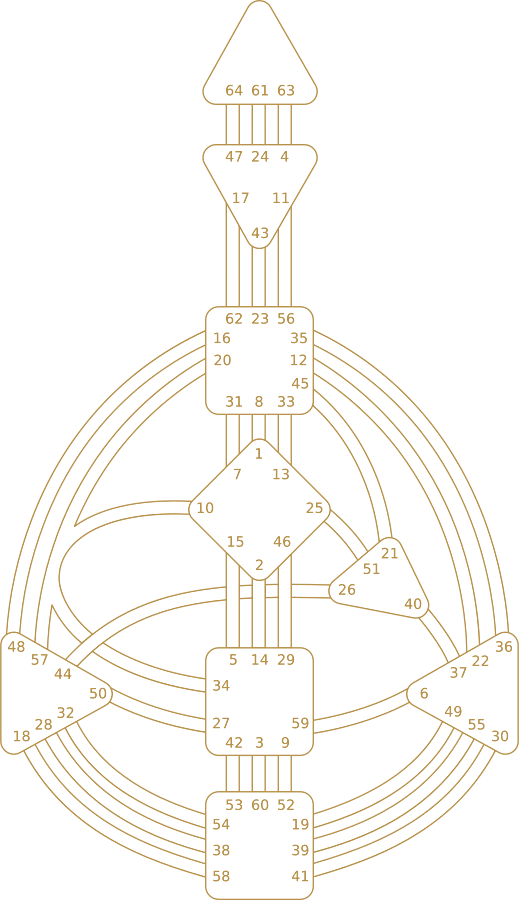
Emotional Authority in Human Design means your decisions are designed to come through time, not through instant clarity. It works through a defined Solar Plexus Center, found in Generators, Manifesting Generators, Manifestors and Projectors. You decide across the emotional wave: there is no truth in the now.
Think of the wave like weather passing over a lake: you would not judge the water in the middle of a storm or at the height of a heat wave, you look once it has settled. Your yes is the one still there when the water is calm.
Not sure this is your Authority? Check with the free chart calculator on this page. It takes your birth date, time and place.
Emotional Authority at a glance
The facts of Emotional Authority in one place, from the Human Design canon and Jovian Archive.
Do you have Emotional Authority? Find it in your chart
Your Authority is calculated from your birth date, birth time and birth place, not from a quiz. Enter your details and your free chart shows your Type, Strategy and Authority.
Your chart shows a different Authority? Each one has its own guide, in the order your chart checks them:
What is Emotional Authority?
In Human Design, your Inner Authority is your most reliable decision-making system. Emotional Authority means your correct decisions come through the Solar Plexus Center, which creates an emotional wave that moves through highs, lows, and everything in between. Unlike Sacral Authority, which gives an immediate gut response, or Splenic Authority, which delivers a quiet intuitive flash, Emotional Authority operates through time.
The core principle of Emotional Authority is captured in one phrase: there is no truth in the now. This does not mean your feelings are not real. It means any single feeling, no matter how strong, is colored by wherever you are on your wave at that moment. Your full truth is the response that remains consistent after the wave has moved through its cycle and you have returned to a place of relative neutrality.
Who has Emotional Authority?
Emotional Authority appears in any chart where the Solar Plexus Center is defined. It outranks every other Authority, so even if you also have a defined Sacral or a defined Spleen, a defined Solar Plexus takes priority. If your Solar Plexus is defined, you have Emotional Authority regardless of what else is defined in your chart. It is the most common Authority: about 47 in every 100 charts, according to Jovian Archive's statistics (46.97%).
This Authority shows up across four Types: Generators, Manifesting Generators, Manifestors, and Projectors. Reflectors cannot have Emotional Authority because they have no defined Centers. To confirm yours, generate your free chart and check the Inner Authority field.
The emotional wave: how it works
The emotional wave is not a flaw. It is the natural operating rhythm of the Solar Plexus Center, and its speed, shape, and intensity vary from person to person. It moves through periods of emotional highs (optimism, excitement, desire), emotional lows (doubt, heaviness, pessimism), and a neutral middle ground where clarity becomes most accessible.
The wave affects how you perceive every decision. At the high, a mediocre opportunity can look like the best thing that ever happened to you. At the low, a genuinely correct opportunity can feel like a terrible idea. Both are the wave coloring your view. So the question to ask is never "Does this feel exciting right now?" It is "Does this still feel correct after the wave has passed?" The first leads to decisions you regret. The second leads to decisions you keep.
There are three general wave patterns in Human Design, and knowing yours can help you recognize when the wave is speaking versus when genuine clarity has arrived.
The tribal wave tends to build slowly and release suddenly. Decisions about family, support, security, and belonging are especially colored by it.
The individual wave is mostly even, with sudden spikes, and its theme is uncertainty. Decisions made during a spike may feel completely different once it passes, even if nothing external has changed.
The collective wave builds through desire and expectation. You build excitement about something, and the wave rises until the experience either meets or falls short of the expectation. Decisions driven by anticipation are especially vulnerable here, because the desire itself can feel like clarity when it is actually the wave building.
You do not need to identify your exact wave type to use Emotional Authority correctly. The practice is the same: give the decision time, experience it from multiple points on your wave, and commit when the response feels stable and consistent rather than intense and urgent.
How long should you wait?
There is no universal timer for Emotional Authority. How long you wait for clarity depends on the size of the decision, the speed of your personal wave, and how emotionally activated you are when the decision arrives.
For smaller decisions, a few hours or sleeping on it is often enough. What matters is that you check the decision from at least two different emotional states before committing. If you felt excited when the idea first arrived, check how you feel about it the next morning when the excitement has naturally dimmed. If the yes is still there without the excitement propping it up, it is likely correct.
For larger decisions (career changes, relationship commitments, significant financial investments, major life direction), give yourself days or sometimes weeks. A commitment that feels right at the peak, at the low, and in the middle has been tested by your full emotional spectrum and is much more likely to hold up over time. For how Emotional Authority plays out in an ordinary day, see Human Design daily alignment.
The practical tool that makes this work is one phrase: "I need some time with this." Variations include "Let me sleep on it," "Can I get back to you tomorrow?", and "I want to sit with this for a few days." These phrases protect your timing without creating conflict.
Emotional Authority by Type
Emotional Authority expresses differently depending on your Type, because the wave interacts with your Strategy.
Emotional Generators still have Sacral energy and the response mechanism (their Strategy is to respond), but their Sacral response is filtered through the emotional wave. You may feel a strong gut yes when something appears, but that gut yes is colored by your current emotional state. The practice for Emotional Generators is to notice the initial Sacral response, hold it without committing, and check back after the wave passes. Learn more on the Generator page.
Emotional Manifesting Generators face a specific tension: their Manifesting Generator speed wants to move immediately, but their Authority requires time. Their Strategy is to respond, then inform before acting, and the wave adds a pause between the two. The practice is to notice the surge of energy and excitement, give the wave time to settle before committing, and inform the people affected before you act. Learn more on the Manifesting Generator page.
Emotional Manifestors feel the urge to initiate, but their Authority adds a timing layer. The inner drive to move is real, but the emotional coloring of that drive shifts with the wave. The practice is to feel the urge, wait for the wave to settle, then inform the people affected (the Manifestor Strategy is to inform) and initiate from clarity rather than from emotional intensity. Learn more on the Manifestor page.
Emotional Projectors wait for invitations, and their Authority adds a second layer of waiting. First, wait for the invitation (Strategy). Then, wait for the emotional wave to settle before accepting (Authority). Emotional Projectors who accept from emotional peaks often find that the role, relationship, or opportunity is not what it seemed once the wave passes. Learn more on the Projector page.
How to practice Emotional Authority in daily life
Start with one habit: add time to every significant decision by default. Not because you are indecisive, but because your design needs time for clarity to emerge. Then track your emotional state alongside your decisions. A quick mental note is enough: "I am feeling high right now," "I am in a low," or "I feel neutral." When you notice that you are at a peak or a low, that is the signal to pause before committing. When you notice you are neutral, that is the window where your decisions are least distorted by the wave.
Separate feeling from commitment. You can feel excited about something and still wait. You can feel doubtful and still hold the possibility open. The feelings are temporary, but commitments are not. Over time you will learn your own rhythm: a fast wave might only need overnight, a slow one several days for a major decision.
Emotional Authority at work
At work, Emotional Authority creates the most value when you stop committing impulsively to projects, timelines, and agreements you have not had time to process. Saying yes in a meeting because the idea sounds exciting, then regretting it the next morning when the excitement has faded, is the classic Emotional Authority work trap.
The approach is straightforward: never commit to significant work decisions in the moment. "Let me review this and get back to you tomorrow." "I am interested, but I need a day." These phrases signal thoughtfulness, not uncertainty. If you often feel overcommitted and resentful, too many agreements were probably made at emotional highs rather than at neutral.
Emotional Authority in relationships
In relationships, Emotional Authority gives you permission to slow down every significant decision. The connection that feels overwhelming at the peak and terrifying at the low needs time to reveal its actual shape, which is the shape it takes at neutral.
The most important relationship skill for someone with Emotional Authority is communicating your timing. Partners who do not understand the wave can read your need for time as rejection. A simple "I need to sit with this, it is how I process, not a reflection of how I feel about you" prevents most of this friction. It also helps to recognize when you are projecting your wave onto your partner: at the low, neutral behavior can look like distance; at the high, the wave's optimism can look like the relationship's reality. "This is my wave, not the relationship" is one of the most useful things you can learn to say to yourself.
For a deeper look at how your energy interacts with another person's, use the Human Design Compatibility Calculator or read about Human Design Relationships.
Common Emotional Authority mistakes
Deciding at the peak
Everything looks brilliant at the emotional high. Committing in that state locks you into agreements that may not survive the low. Wait for neutrality.
Dismissing at the low
Everything looks hopeless at the emotional low. Rejecting opportunities in that state may cause you to miss what was genuinely correct. Wait for neutrality.
Confusing intensity with clarity
Strong feelings are not the same as clear feelings. Intensity is the wave. Clarity is what remains after the wave passes.
Rushing because others pressure you
Other people's timelines are not your Authority. When someone demands an immediate answer, your correct response is "I need time" not "I guess yes."
Trying to find the perfect feeling
Emotional clarity is not euphoria. It is steadiness. A calm, neutral yes that does not waver is more reliable than an ecstatic yes that might be the wave talking.
Projecting the wave onto others
Your emotional low can make everything look wrong, including your relationships, your work, and your life. Before making changes from a low, wait for the wave to pass and reassess.
Next steps
Emotional Authority is one layer of your design. Your Authority shapes how you decide; your Type and Strategy shape how you engage with life. Read the page for your Type (Generator, Manifesting Generator, Manifestor or Projector) to see how your Strategy and your wave work together, and compare all seven on the Human Design Authority guide. A Human Design reading goes further across 60+ sections, showing how your own wave, Centers, Gates and Channels shape your timing and decisions.
FAQ: Emotional Authority Human Design
What is Emotional Authority in Human Design?
Emotional Authority means your best decisions come through time. You wait for your emotional wave to settle and commit when your response feels calm, steady, and consistent rather than intense or reactive.
How do I know if I have Emotional Authority?
Generate your free chart and check the Inner Authority field. If it says Emotional or Solar Plexus, your decisions are designed to come through time. The rule is simple: if your Solar Plexus is defined, it outranks every other Authority, so you have Emotional Authority whatever else is defined.
How long should I wait before deciding?
It depends on the decision. Smaller choices may need overnight. Larger commitments may need days or weeks. The goal is to experience the decision from at least two different emotional states before committing.
What does emotional clarity feel like?
Clarity feels neutral and steady, not euphoric or pessimistic. It is a calm yes that remains true whether you are at a high, a low, or in the middle of your wave.
Why do I keep changing my mind?
Your perspective shifts as your wave moves. This is normal and expected. The practice is to observe the shifting without locking decisions into any single emotional state.
Does Emotional Authority override Sacral response?
Yes. If you have both a defined Solar Plexus and a defined Sacral, the Solar Plexus takes priority. Your Sacral response is still real but needs to be checked through the wave before committing.
What are the different emotional wave types?
The three main waves are tribal (slow build, sudden release), individual (mostly even, with sudden spikes), and collective (builds through desire and expectation). All three use the same clarity test: does the response hold after the wave passes?
Can I ever decide in the moment with Emotional Authority?
You can notice your initial reaction, but avoid locking in significant commitments immediately. Small daily choices can be made faster, but anything that shapes your trajectory deserves time.
What is the rarest Authority in Human Design?
In Jovian Archive's statistics the rarest inner Authorities are Ego (about 1 in 100 charts: Ego Manifested 0.8%, Ego Projected 0.45%) and Lunar, which belongs to Reflectors (about 1.4 in 100). Emotional Authority is the opposite: the most common, at about 47 in every 100 charts (46.97%), followed by Sacral at about 35.