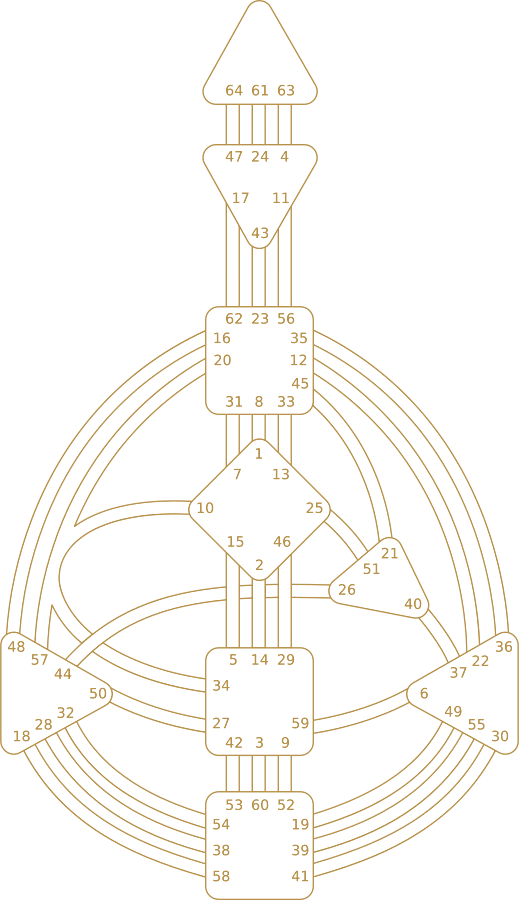

Human Design Perspective
Human Design Perspective is the arrow at the bottom right of a chart, also called View. It names the lens your awareness looks through. There are six: Survival, Possibility, Power, Wanting, Probability and Personal.
This page explains what Perspective is, the six Perspectives, what the arrow direction adds, transference, and the names that are easy to mix up. Each Perspective has its own guide. Start with your free chart below.
Simple way to think about it: Think of Perspective as the lens on a camera. Everyone is looking at the same street, but each lens brings something different into focus first.
Find your Perspective: start with your free chart
Enter your birth date, time and place. Your free chart shows your Perspective as a number beside the bottom right arrow.
Reading the arrows in your free chart. Four small arrows sit beside the head of the chart, each with a big number. The big number beside the bottom right arrow is your Perspective: 1 Survival, 2 Possibility, 3 Power, 4 Wanting, 5 Probability and 6 Personal, and the arrow shows left or right. Your Human Design reading names your Perspective and says which way its arrow points.
What is Perspective in Human Design?
Perspective is one of the four Variables. It is the arrow at the bottom right of the chart, on the Personality side, which is the mind and what you are aware of. Some teachers call it View.
Your Perspective names what your awareness tends to notice before thought arrives. It is not a belief or an opinion. Two people can stand in the same room, and one notices what will hold up while the other notices what could happen next.
Each person has one Perspective, and its arrow points left or right.
The six Perspectives
Here are the six Perspectives. Unlike Digestion, Environment and Motivation, the Perspectives have no separate names for their two sides. The arrow points left, called Focused, or right, called Peripheral.
| Survival | The lens that notices what holds up and what keeps going. Transference: Wanting. |
|---|---|
| Possibility | The lens that notices openings and what a thing could become. Transference: Probability. |
| Power | The lens that notices who decides and how things are arranged. Transference: Personal. |
| Wanting | The lens that notices what is missing and what appeals. Transference: Survival. |
| Probability | The lens that reads how things are likely to unfold. Transference: Possibility. |
| Personal | The lens that takes in how things land on one person. Transference: Power. |
Left, or Focused, is active, strategic and focused: attention goes to one thing on purpose. Right, or Peripheral, is receptive, passive and peripheral: attention takes in the wider scene. The direction changes how you look, not what you look for.
Transference: the lens that is not yours
Transference is the not-self pattern of Perspective. When the mind is conditioned away from its own lens, it tends to look through the one three steps away. Survival and Wanting are each other's transference, so are Possibility and Probability, and so are Power and Personal.
There is nothing wrong with the other lens. It is simply not yours. When what you notice feels borrowed, that is the moment to come back to your own.
| Survival and Wanting | Survival Perspective and Wanting Perspective are each other’s transference. |
|---|---|
| Possibility and Probability | Possibility Perspective and Probability Perspective are each other’s transference. |
| Power and Personal | Power Perspective and Personal Perspective are each other’s transference. |
Names that are easy to mix up
All six Human Design Perspective guides
Each guide covers Focused and Peripheral, transference, and how that Perspective shows up at work, at home and in relationships.
Next steps
Run your free chart for your Type, Strategy and Authority, then read the guide for each of your Variables. Keep your Strategy and Authority first, and let the Variables add detail to them.
FAQ: Human Design Perspective
What is Perspective in Human Design?
Perspective is one of the four Variables. It is the arrow at the bottom right of the chart, on the Personality side, also called View. It names the lens your awareness looks through. There are six: Survival, Possibility, Power, Wanting, Probability and Personal.
What are the six Perspectives in Human Design?
Survival, Possibility, Power, Wanting, Probability and Personal. Each one can come with the arrow pointing left, called Focused, or right, called Peripheral.
How do I find my Perspective in Human Design?
Start with your free chart, which gives you your Type, Strategy and Authority. A Human Design reading has a section that names your Perspective and says which way your Perspective arrow points.
What is the difference between Focused and Peripheral Perspective?
Focused is the arrow pointing left: active, strategic and focused, attention on one thing at a time. Peripheral is the arrow pointing right: receptive, passive and peripheral, attention on the wider scene. Neither ranks above the other.
Is Perspective the same as View in Human Design?
Yes. View is another name for the same Variable, the arrow at the bottom right of the chart. This site uses the name Perspective.
What is transference in Human Design Perspective?
Transference is the not-self pattern. When the mind is conditioned away from its own lens, it tends to look through the one three steps away: Survival and Wanting, Possibility and Probability, Power and Personal. It is something to notice, not a fault.