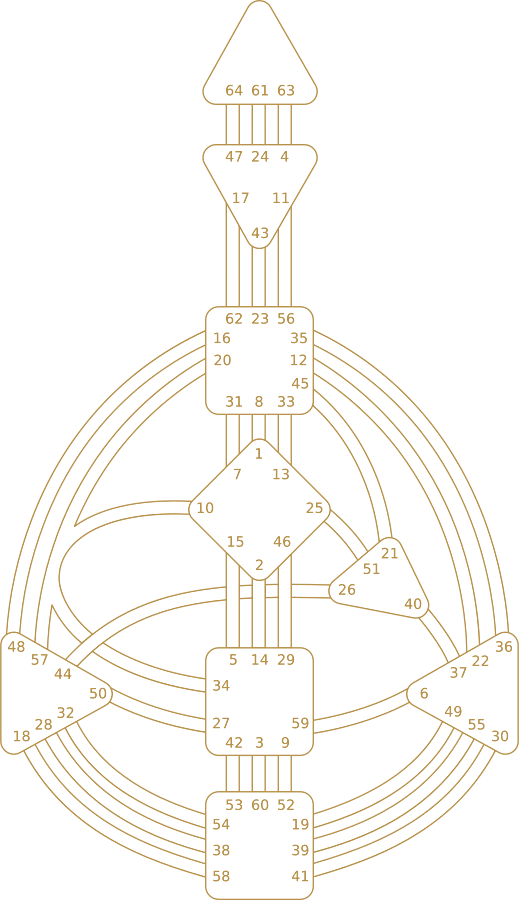

Projector and Projector Relationship
A Projector and Projector relationship brings together two people who are deeply sensitive, perceptive, and designed to understand energy rather than constantly generate it. It works when both of you recognize each other out loud and build your life around rest instead of output.
Picture two skilled navigators sharing a small sailboat with no engine: both read the wind and the water beautifully, so the trip goes well when they agree on the pace and stop pretending either of them can row all day.
Want to compare your two charts? Use the free compatibility calculator on this page. It takes both birth dates, times and places.
Projector and Projector at a glance
The Projector at a glance, from the Human Design canon. Two people of the same Type share the Strategy, Signature, Not-Self theme and aura, while each person's Authority and the rest of each chart can still differ.
| Theme | Both of you: Projector |
|---|---|
| Strategy | Wait for the invitation |
| Signature | Success |
| Not-Self theme | Bitterness |
| Aura | Focused and absorbing |
| Authority | Splenic, Emotional, Self Projected, Ego Projected or Mental |
Both of you are Projectors, so you share the Strategy to wait for the invitation. Each of you also has a focused and absorbing aura, so you can take each other in deeply and see what is really going on beneath the surface. The relationship runs on recognition, invitation and rest, and you are both working toward the same Signature, Success, while watching for the same Not-Self theme, Bitterness.
Compare your two charts
Type is one layer of a relationship. Enter both birth dates, times and places to generate your two charts, then compare each Type, Strategy and Authority with the table above.
Beyond Type, two charts meet Channel by Channel. Human Design names four ways this happens (electromagnetic, companionship, dominance and compromise), and only your two full charts show which ones apply to you.
Every pairing of the five Types has its own guide:
Projector and Projector energy dynamic
When two Projectors come together, the connection often feels observant, emotionally aware and highly tuned in. You may feel an immediate sense of being understood because both of you naturally pick up on nuance, tone and subtle shifts. When both partners feel truly recognized, there is a deep kind of intimacy here, and the relationship can feel emotionally intelligent, nourishing and safe. When both are waiting to be seen and neither is clearly offering recognition, the same connection can start to feel bitter, tired and silently resentful.
The defining tension is usually recognition versus depletion. Neither of you has a defined Sacral, so the relationship is not built to run on constant output, speed or pressure, and you may mirror each other's sensitivity, fatigue and need for recognition. A common pattern: both of you feel something important, both wait for the other to notice first, and neither names what you need until quiet resentment starts building.
Unlike a Generator and Projector relationship, where energy and guidance create the main tension, this pairing usually turns on whether both people are getting enough recognition and enough rest to stay openhearted. It rarely breaks down for lack of love or insight. It breaks down when needs go unnamed until depletion and bitterness take over.
When it feels aligned
Both people feel intentionally recognized, pacing is respected, and the relationship becomes a place of calm depth rather than pressure.
When it feels off
Both people feel emotionally aware but energetically drained, and the relationship slowly fills with unspoken need, sensitivity and quiet bitterness.
Emotional tone
This pairing can feel intimate, wise and validating, but it can also become intense when too much is being felt and not enough is being clearly named.
What helps most
More direct recognition, clearer boundaries and enough rest help this relationship stay nurturing instead of overwhelming.
Who this relationship works best for
A Projector and Projector relationship tends to thrive when both people value emotional honesty, deep connection and a slower, more intentional rhythm, and when both understand that sensitivity is not weakness and rest is not laziness. It suits two people who do not expect the other to constantly produce, initiate or sustain endless activity, and who would rather build a life that honors spaciousness and the truth of how their energy actually works.
Best when recognition is mutual
This relationship feels healthier when both people intentionally see, affirm and appreciate each other instead of waiting silently to be noticed.
Best when rest is respected
Two Projectors do better when they stop trying to prove themselves through output and build rhythms that actually support their energy.
Best when life is built around alignment
This bond thrives when both people create a calmer way of living that values depth, timing and real connection over busyness.
Strengths of this relationship
Two focused, absorbing auras give this pairing its depth: each of you can feel genuinely seen by the other, and that is worth protecting.
Deep understanding
Two Projectors often understand each other's emotional needs, energetic limits and relational sensitivity in a way that feels supportive.
Strong emotional intelligence
This pairing can become highly aware, thoughtful and communicative because both partners naturally notice subtle relationship dynamics.
Mutual validation
When both people feel recognized, the relationship can become a place where each person feels truly seen and appreciated for who they are.
Aligned pacing
Because both partners need rest and spaciousness, this pairing can create a lifestyle that feels calmer, more intentional and less forceful.
Common challenges
Most of the trouble in this pairing comes from repeating the wrong recognition pattern, not from a lack of care. It shows up around recognition, energy, resentment and unrealistic expectations, especially when two Projectors try to live as though they have constant energy when they do not. For Projectors, Bitterness is the clearest signal that something is off, and between two Projectors it can build quietly in both people at once.
Waiting silently to be recognized
Both people long to feel deeply seen, but the relationship weakens when each assumes the other should already know what they need without it being said.
Trying to live like an energy relationship
Because neither of you has a defined Sacral, routines and workloads built for constant output leave both of you drained.
Overprocessing instead of grounding
Two Projectors can talk, analyze and reflect for hours, which is powerful until it turns into endless feeling and analyzing with no pause, structure or recovery.
Confusing sensitivity with fragility
The relationship gets heavier when every subtle shift is absorbed deeply but never held with perspective and boundaries.
Projector Not-Self: Bitterness
Bitterness appears when a Projector feels unrecognized, overextended, unappreciated, or stuck offering guidance that is not being received.
Projector and Projector in romantic relationships
Romance between two Projectors can feel intimate and deeply personal, especially when both partners value meaningful conversation and true presence. It works best when both of you feel chosen and recognized, not just needed. It struggles when both are exhausted, waiting for validation, or trying to get needs met without naming them. When communication is open and rest is honored, this pairing can feel profoundly nurturing, a partnership where each person is appreciated for who they are rather than for how much they do.
What supports romance
Romance deepens when both people feel intentionally recognized, emotionally safe and free to move at a pace that honors their energy.
What weakens romance
The relationship gets strained when both people feel unseen, overtired or quietly resentful while still trying to appear emotionally available.
Projector and Projector working together
At work, two Projectors can be very insightful together: guidance, strategy, coaching, systems thinking and reading people or environments clearly. They do well in roles where perception matters more than nonstop output, and struggle under long hours or environments that reward only energy and speed. Each of you sees how others use their energy, so you can guide each other well, as long as the guidance is invited rather than offered unasked. Two Projectors work best together when their insight is valued and their workload is designed sustainably.
Best-case work dynamic
Two Projectors create thoughtful, high-value work when they are trusted for their perception, timing and ability to guide systems clearly.
Worst-case work dynamic
Work becomes draining when both people are expected to produce endlessly, perform like energy Types, or carry loads that do not match how they are built.
Stability and long term potential
This pairing can absolutely work long term, but stability comes from recognition and pacing more than from forcing consistency. Long term success depends on whether recognition, boundaries, rest and honest communication all stay intact. When they do, this relationship can feel deeply nourishing and emotionally safe instead of quietly bitter, and both of you have room to grow toward Success together.
What builds trust
Both people intentionally recognize each other, name their needs clearly, and stop pretending they have more energy than they actually do.
What weakens stability
Repeated depletion, silent resentment and an unspoken need for recognition can make this pairing feel emotionally heavy instead of supportive.
Long term lesson
This relationship works best when both people stop waiting to be understood automatically and make recognition an active part of how they love each other.
How to create alignment in this relationship
Alignment for two Projectors is less about doing more and more about choosing well. Each of you follows your own Strategy and Authority, invites the other clearly, and protects the rest that keeps you both open.
Recognize each other often
Say what you see and value in each other, out loud and specifically, rather than assuming it is understood.
Honor rest and pacing
Build a shared life that respects energy limits instead of pretending constant output is normal or sustainable.
Communicate clearly
Honest communication prevents emotional guessing and the buildup of bitterness when needs go unspoken. If either person has Emotional Authority, patience with timing becomes even more important.
Create a calm environment
Choose rhythms, spaces and routines that feel grounded, supportive and not overstimulating.
Next steps
Start with Projector Human Design and Projector Strategy, then find each partner's Authority: Splenic, Emotional, Self Projected, Ego Projected or Mental. The Strategy, Authority and Signatures guides explain the system behind them, and Human Design Relationships and the Human Design Compatibility Calculator page go further into partnerships.
To see how a Projector meets other Types, compare the Generator and Projector and Projector and Manifestor pairings. A Human Design reading for each of you shows, across 60+ sections, your own Authority, your open Centers and how your Strategy plays out in relationships.
FAQ: Projector and Projector Relationship
Are two Projectors compatible?
Yes, two Projectors can be very compatible when both respect each other's sensitivity, need for recognition and natural energy limits. Type alone does not decide compatibility, though: how your two full charts meet tells you much more.
Why can a Projector and Projector relationship feel intense?
Both partners are perceptive and attuned to subtle dynamics, and each takes the other in through a focused aura. That closeness creates real intimacy, and it can tip into overwhelm when neither of you steps back to rest.
What causes bitterness in this pairing?
Bitterness, the Projector Not-Self theme, tends to grow here when each of you keeps waiting to be seen and neither says so first. Treat it as a signal to name what you need, not as proof the relationship is wrong.
What makes this pairing unique compared with other Human Design relationships?
Both people need recognition and neither has a defined Sacral, so there is no partner carrying steady work energy for the two of you. The relationship turns on whether appreciation and rest are deliberately built in, and on whether each of you is willing to be the one who extends the invitation.
What helps this relationship work better?
Extending real invitations to each other, appreciating each other specifically, and planning your week around rest rather than around how much you can get done. Building rest into the week before either of you is drained does more than catching up on it afterward.
What is the biggest misconception about this pairing?
That two Projectors will lack enough energy to build a life together. Projectors are not designed for constant output; their strength is wisdom, guidance and perception. Two Projectors can thrive when their lifestyle matches their actual energy instead of mimicking energy Types.
How does authority affect a Projector and Projector relationship?
Each Projector has Splenic, Emotional, Self Projected, Ego Projected or Mental Authority, which shapes how they make decisions. If your Authorities differ, your decision rhythms differ too, and both need room for the relationship to stay aligned.
How do you know if a Projector and Projector relationship is working?
Both people feel a sense of Success, which is the Projector Signature. If Bitterness has become the main feeling for either of you, something in the dynamic needs to shift.
What happens when two Projectors are in a relationship?
Two people who are each waiting for the invitation share a life, so whoever notices a need first can invite the other into it. Life together tends to settle into a quieter rhythm, and the bond deepens when both of you treat that slower pace as right for you rather than as a shortcoming.
How do you check Projector and Projector compatibility in Human Design?
Partnership analysis reads both charts together in one BodyGraph, the Partnership Composite. It looks at how many Centers the two of you define together and at how you meet in each Channel: electromagnetic, companionship, dominance or compromise. To start, put both birth details into the free compatibility calculator on this page.