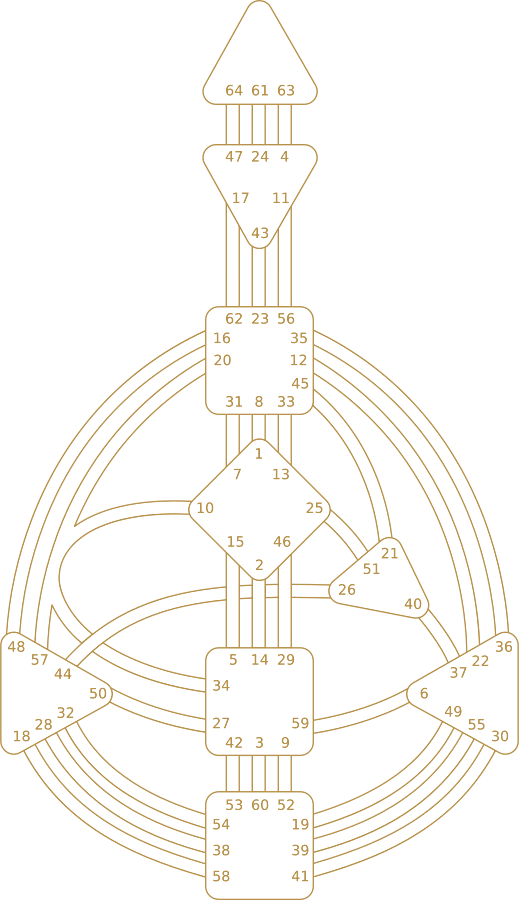

Generator and Projector Relationship
A Generator and Projector relationship is one of the most common pairings in Human Design. Generators bring sustainable life-force energy, and Projectors bring the insight to guide where that energy is best used.
Think of the Generator as the engine and the Projector as the navigator: the engine keeps the car moving, and the navigator sees which road gets you there with the least wasted fuel. The navigator guides best when the driver asks for directions.
Want to compare your two charts? Use the free compatibility calculator on this page. It takes both birth dates, times and places.
Generator and Projector at a glance
The Generator and the Projector side by side, from the Human Design canon.
| Theme | Generator | Projector |
|---|---|---|
| Strategy | To respond | Wait for the invitation |
| Signature | Satisfaction | Success |
| Not-Self theme | Frustration | Bitterness |
| Aura | Open and enveloping | Focused and absorbing |
| Authority | Sacral or Emotional | Splenic, Emotional, Self Projected, Ego Projected or Mental |
The Generator's aura is open and enveloping, taking in life while they wait for something to answer, and their Strategy is to respond. The Projector's aura is focused and absorbing, taking in the other person closely, and their Strategy is to wait for the invitation. One of you waits for something to respond to and the other waits to be asked, so this relationship runs best when each of you gives the other exactly that.
Compare your two charts
Type is one layer of a relationship. Enter both birth dates, times and places to generate your two charts, then compare each Type, Strategy and Authority with the table above.
Beyond Type, two charts meet Channel by Channel. Human Design names four ways this happens (electromagnetic, companionship, dominance and compromise), and only your two full charts show which ones apply to you.
Every pairing of the five Types has its own guide:
Generator and Projector energy dynamic
Generators have a defined Sacral Center that produces sustainable energy for work, creativity, and building. Projectors do not have a defined Sacral and do not generate that same consistent energy, but they often have a natural ability to see how energy should be used. The defining tension in this pairing is usually energy versus invitation: the Generator has the fuel, and the Projector sees how it could be directed more wisely, but that guidance works best when it is invited.
At first this relationship often feels supportive because each person senses the other has something valuable. The Generator may feel energized by the Projector's focus and insight. The Projector may feel drawn to the Generator's warmth and ability to keep things moving. The real question is whether the Projector's guidance lands as support or as correction. A common pattern is the Projector clearly seeing a better way, offering it too early, and the Generator shutting down because it feels like pressure.
Unlike a Generator and Manifestor relationship, where pace and independence often drive the tension, this pairing turns on whether guidance is invited and whether energy is being used in a way that actually feels correct. It rarely breaks down because the two people have nothing to offer each other. It breaks down when the Projector stops feeling recognized and the Generator stops feeling free. One feels unseen, the other feels managed, and both start believing the problem is the other person rather than the pattern.
When it feels aligned
The Generator feels free to respond in their own timing, the Projector feels genuinely recognized, and guidance lands as support instead of pressure.
When it feels off
The Projector keeps offering insight that is not really being invited, and the Generator starts feeling watched, corrected, or resistant.
Emotional tone
Deeply supportive and clarifying at its best, tense when guidance turns into control or the Generator's energy turns into overwhelm for the Projector.
What helps most
Recognition, timing, and respect for two different energy patterns keep this pairing complementary instead of draining.
Who this relationship works best for
This pairing works best for a Generator who respects the Projector's need for recognition and rest, and a Projector who respects the Generator's natural pace and response process. It thrives when both value different strengths instead of expecting the other to operate the same way.
Best when recognition is present
Projectors tend to open up and guide more clearly when they feel genuinely seen and valued instead of overlooked.
Best when pace is respected
The relationship stays healthier when the Projector is not expected to keep Generator speed and the Generator is not micromanaged.
Best when guidance is invited
The Projector's insight lands better when it is welcomed, and the Generator usually responds better when they do not feel pushed.
Best when both stop forcing sameness
This pairing grows when both people understand that different energy patterns are not a problem to fix but a strength to work with.
Strengths of this relationship
The strengths here come straight from the difference between you: one sustains the work, the other sees how to make it count.
Natural teamwork
Generators create momentum while Projectors help guide direction. Together they can accomplish a lot with less wasted energy.
Recognition and appreciation
When the Generator recognizes the Projector's insight, the Projector often feels valued and becomes even more supportive.
Balanced energy
Generators bring consistent activity while Projectors offer reflection, perspective, and a more strategic view of life.
Growth through awareness
This pairing often becomes stronger when both people understand their Human Design roles and stop trying to be the same.
Common challenges
Most challenges appear when guidance is not recognized or energy is not respected. The signals are specific to you two: frustration in the Generator usually means energy went where it was never invited, and bitterness in the Projector usually means guidance went where it was never asked for.
Offering guidance too early
The Projector may clearly see the issue, but if the insight arrives before an invitation, the Generator often hears it as criticism instead of support.
Confusing observation with control
The Generator may assume the Projector is trying to manage them, when the Projector is actually trying to help energy flow more wisely.
Expecting equal energy output
Generators can sustain more activity than Projectors. The relationship weakens when the Projector pushes to keep Generator pace and ends up exhausted.
Lack of recognition
Projectors thrive on being seen. Without recognition, they may begin to feel invisible, dismissed, or disconnected.
Generator Not-Self: Frustration
If the Generator is forcing decisions, overcommitting, or using energy on the wrong things, frustration builds in the relationship.
Projector Not-Self: Bitterness
If the Projector feels unseen, unrecognized, or keeps offering guidance that is not received, bitterness can begin shaping the connection.
Generator and Projector in romantic relationships
Romance between a Generator and a Projector can feel magnetic. The Generator's open, enveloping aura often draws the Projector in, while the Projector's focused attention can feel deeply validating to the Generator. It works best when the Generator does not feel managed and the Projector does not feel ignored.
In love, the invitation matters as much as it does anywhere else. A Projector who is asked for their view on the relationship tends to give it with care, and a Generator who is given something clear to respond to can answer from the gut instead of overthinking. When the Generator keeps asking and the Projector keeps waiting to be asked, the connection can become deeply supportive and emotionally fulfilling.
What supports romance
Romance deepens when the Generator feels free to be themselves and the Projector feels genuinely recognized, chosen, and appreciated.
What weakens romance
The relationship gets strained when the Projector feels unseen or the Generator feels constantly corrected, managed, or pressured.
Generator and Projector working together
At work, the Generator often brings execution, sustained effort, and follow-through, while the Projector brings systems thinking, efficiency, and strategic guidance. It works best when the Generator is trusted to respond and the Projector is invited to guide. Give the Projector a role where their read on people and process is asked for, such as reviewing a plan or shaping how the team works, and let the Generator take on the work their Sacral says yes to.
Best-case work dynamic
The Generator provides momentum, while the Projector helps organize energy, improve systems, and refine direction.
Worst-case work dynamic
Work becomes tense when the Generator feels micromanaged or the Projector feels ignored even when they clearly see a better path.
Stability and long term potential
This pairing can work long term when the Generator keeps asking and the Projector keeps waiting to be asked. The Generator needs room to say no to advice without it costing the Projector's goodwill. The Projector needs enough recognition to know their guidance is actually welcome. When response, recognition, rest, and mutual respect all stay intact, the relationship feels sustainable instead of one-sided. Over years, the Projector learns which kinds of guidance this Generator actually wants, and the Generator learns that the Projector's quiet observation is care, not judgment.
What builds trust
The Generator values the Projector's insight, and the Projector respects the Generator's process instead of pushing for immediate change.
What weakens stability
Repeated misrecognition, pressure, and energy mismatch can make this pairing feel draining instead of supportive.
Long term lesson
Both people stop demanding sameness and start trusting that different roles can still create real partnership.
How to create alignment in this relationship
Alignment here is practical: the Projector waits to be asked, and the Generator gets in the habit of asking. A question like "What do you see here?" gives the Projector's insight a door to come through, and the Generator still chooses what to do with the answer.
Generator tip
Respond to life rather than forcing decisions. Honor your Sacral response (or your emotional wave, if your Solar Plexus is defined) before committing. This keeps your energy cleaner and easier for the Projector to understand and support.
Projector tip
Wait for the invitation before offering guidance. When invited, your insight becomes much more powerful and better received.
Shared awareness
Knowing each other's design stops either of you reading the other's nature as a flaw. If either partner has Emotional Authority, give an invitation or a yes time to settle before acting on it.
Pace matters
Let the Generator have their natural rhythm, and let the Projector have space to rest and observe without pressure to keep up.
Next steps
Go deeper on each of you: read Generator Human Design and Generator Strategy, then Projector Human Design and Projector Strategy. Your decisions follow your Authority: the Generator's is Sacral or Emotional, and the Projector's is Splenic, Emotional, Self Projected, Ego Projected or Mental. For the wider picture, start at Human Design Relationships and the Human Design Compatibility Calculator.
Compared to a Generator and Generator relationship, this pairing has less shared raw energy and more emphasis on guidance and recognition.
A Human Design reading for each of you goes past Type into 60+ sections, including the open Centers that absorb your partner's energy and the Authority behind each of your decisions.
FAQ: Generator and Projector Relationship
Are Generators and Projectors compatible?
Yes. This pairing can be very balanced when both people respect their natural roles. Type alone does not decide compatibility, though: the full picture comes from comparing both charts.
Why do Generators attract Projectors?
The Generator's defined Sacral gives off consistent life-force energy, which Projectors are often naturally drawn to observe, understand, and guide.
What causes conflict in this relationship?
Conflict often appears when Generators force life instead of responding, or when Projectors offer guidance before being invited.
What makes this pairing unique compared with other Human Design relationships?
Few pairings split the work this cleanly: one of you is built to sustain energy and the other to guide it. That makes the invitation the hinge of almost every good day together.
What helps a Generator and Projector relationship work better?
The Generator honors their response and the Projector waits for the invitation. Respecting different energy rhythms also makes a big difference.
What is the biggest misconception about this pairing?
That the Projector should manage the Generator, or that the Generator should simply follow the Projector's direction. In reality, the Projector guides best when invited and the Generator responds best when free. Neither person controls the other.
How does authority affect a Generator and Projector relationship?
Authority determines how each person makes decisions. The Generator may have Sacral or Emotional Authority, while the Projector may have Splenic, Emotional, Self Projected, Ego Projected, or Mental Authority. Understanding each person's decision-making process helps reduce pressure and miscommunication.
How do you know if a Generator and Projector relationship is working?
The Generator feels satisfied and the Projector feels successful. Satisfaction and Success are the Signatures of these two Types. If frustration and bitterness are the dominant feelings, something in the dynamic needs to shift.
What is the difference between a Generator and a Projector in a relationship?
A Generator has a defined Sacral, an open and enveloping aura, and the Strategy to respond, with Satisfaction as the Signature and Frustration as the Not-Self theme. A Projector has no defined Sacral, a focused and absorbing aura, and the Strategy to wait for the invitation, with Success as the Signature and Bitterness as the Not-Self theme. In a relationship, that means one partner sustains the energy and the other guides it when asked.
How do you check Projector and Generator compatibility in your own charts?
Enter both birth dates, times and places in the Human Design Compatibility Calculator to see both charts. Beyond Type, look at where your Channels meet: when each of you has one Gate of a Channel, that is electromagnetic; when you both have it, companionship; when one of you has the whole Channel and the other has none or only one of its Gates, dominance or compromise. Those meeting points, not Type alone, shape how the connection feels day to day.