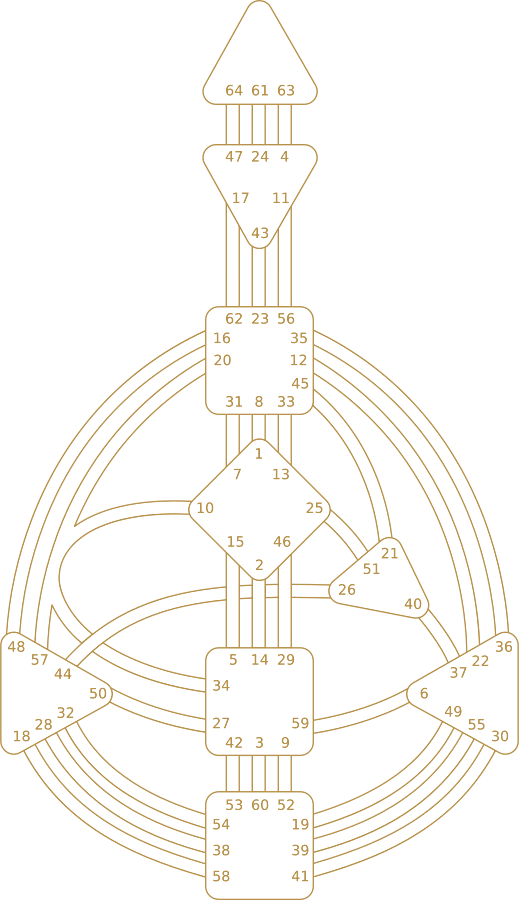

Personal Perspective in Human Design
Personal Perspective in Human Design is the lens your awareness looks through when it takes in how things land on one person, one relationship or one close, lived moment.
This page is for anyone who found Personal Perspective in a chart, or who is reading about all six Perspectives and wants plain words for this one. It covers what the lens is, what the arrow pointing left (Focused) or right (Peripheral) changes, how it plays out at work, at home and with other people, and how to test it gently. Start with your free chart below.
Simple way to think about it: Imagine a tailor who looks at every coat as a question about the one body that will wear it, never as a rack of sizes.
What is Personal Perspective in Human Design?
Perspective is the bottom right arrow on the Personality side of the chart, also called View. It describes the angle your awareness leans toward. There are six Perspectives, and each person has one. Personal is the angle that gathers meaning at the scale of the individual.
With this lens, the mind tends to ask how something feels to the person in front of it. Big ideas, such as a general rule, a big plan or a group announcement, often reach the mind through one face, one story and one set of circumstances. Details about a specific person often stay with you long after the facts of the event have faded.
It is a way of paying attention, not a way of being. Personal Perspective does not make anyone selfish, and it does not mean everything is about you. It means the mind makes sense of the world one person at a time, including the one who is reading this.
Personal Perspective at a glance
| Variable | Perspective, also called View, one of the four Variables. It is the arrow at the bottom right of the chart, on the Personality side. |
|---|---|
| The six | Survival, Possibility, Power, Wanting, Probability and Personal. |
| Arrow left | Focused: active, strategic and focused. |
| Arrow right | Peripheral: receptive, passive and peripheral. |
| Transference | Power, the Perspective three steps away. |
| Works with | Your Strategy and Authority. Perspective supports them and never replaces them. |
Is your Perspective Personal? Start with your free chart
Enter your birth date, time and place. Your free chart shows your Perspective as a number beside the bottom right arrow.
Reading the arrows in your free chart. Four small arrows sit beside the head of the chart, each with a big number. The big number beside the bottom right arrow is your Perspective: 1 Survival, 2 Possibility, 3 Power, 4 Wanting, 5 Probability and 6 Personal, and the arrow shows left or right. Left is Focused and right is Peripheral. Your Human Design reading names your Perspective and says which way its arrow points.
Focused or Peripheral: which way your arrow points
Perspective has no side names. What counts is the direction of the arrow. If your Personal Perspective has the arrow pointing left, it is Focused. If it points right, it is Peripheral. Left is active, strategic and focused. Right is receptive, passive and peripheral. They are two styles of using the same lens.
Arrow pointing left (Focused)
A Personal Perspective with the arrow pointing left (Focused) tends to give full attention to one person or one situation at a time. The mind settles on a single story and learns it closely: what this person needs, how this moment is going, what this one connection is about. Others may describe the person as attentive and present. The lens works like a close-up photograph, sharp at the middle. The strength is depth with the individual. The thing to watch is that the close view can leave out the wider crowd or the bigger picture around that one person.
Arrow pointing right (Peripheral)
A Personal Perspective with the arrow pointing right (Peripheral) tends to take in many individuals at once, each in a light way. The mind picks up on the mood of one person at a table, the situation of another, the quiet story of someone passing through. Attention is receptive, and it gathers personal details from around the edges rather than choosing a single person. The lens is like a lamp over a long table, lighting every face a little. The strength is a wide, warm awareness of people. The thing to watch is that so many stories can feel crowded and hard to sort.
When Personal slips into Power: transference
When the mind is conditioned away from its own Perspective, it tends to run on the one three steps away. For Personal, that is Power. The mind then looks at how things are arranged, who holds influence, and what a situation could do, rather than how it lands on one person. This can feel like a sense of being measured or of needing to compete, while the quieter personal question gets less room. There is nothing wrong with that lens. It is simply not yours. To notice it, watch for moments when you sort people by weight and rank before you wonder how they are doing.
Read the Power Perspective guide to see what that lens looks like when it is someone's own.
Why Personal Perspective can surprise you
The word Personal can sound like private, selfish or too close to the self. It is none of these. It is a plain name for the lens, and it points toward people rather than away from them. Personal Perspective is also not the same as being personal in a social sense, such as sharing every detail of your life. Other sites may use other words for this arrow. To test it gently, notice over a week whether you remember people's stories more easily than their titles or numbers, and see what you find.
What Personal Perspective notices first
With Personal Perspective, you tend to notice the person inside the situation. At a gathering, you might first sense who seems out of place or who is carrying something. In a report, you might wonder who it affects. Others may notice the system, the odds or the plan, which you can miss. You might ask how someone is doing, what their day was like, and how a change touches them in particular. Try noticing how often your questions begin with a name.
Try it this week
Personal Perspective at work
At work, Personal Perspective often shows up as attention to the people behind the tasks. You may be the colleague who senses that a teammate is stretched thin, who remembers a client's family name, or who asks how a policy will feel to the person using it. With the arrow pointing left (Focused), this tends to be deep care for one or two key people. With the arrow pointing right (Peripheral), it tends to be a broad awareness of the whole room.
When a job asks for the opposite, such as writing for a large audience or deciding by chart and number, you can keep your lens by picturing one real person who would read or use the result. Writing to that one person often gives the work a clear voice. Then check the broader facts so that your close view does not stand alone.
Personal Perspective at home
At home, Personal Perspective may show up as a feel for each person under the same roof. You might notice who is tired before they say a word, remember what each person likes for dinner, or sense when a room needs a gentle check-in. This can make a home feel cared for. It can also leave you carrying everyone's moods. Try giving yourself a small private space and a few minutes each day where nobody's story needs your attention. Your own space works well when it holds room for your own quiet too.
Personal Perspective in relationships and family
With a partner, friend or family member whose Perspective is different, the gap may show in what each of you talks about. You might describe how an event felt to a specific person, while the other person speaks of the plan, the options or the odds. Neither is wrong. It helps to tell them that you are thinking about the people involved, and to ask what they notice. Listening to their wider or more structural read can balance your close one, and your attention to individuals can warm theirs.
Decisions and plans
When you weigh a choice, Personal Perspective colors the first question: who will this touch, and how? That is useful input, and only input. Your Strategy and Authority decide what to do. Try listing the people involved in each option, then check each option with your Authority before the lens fills the page with faces. If you feel pulled by one person's situation, give it time so that your own answer can be heard.
When you feel off track
You may be running on someone else's lens if you find yourself ranking people, tracking who has more influence, or feeling that you have to compete before you can relax. Personal stories may feel oddly far away. A gentle way back is to pick one person you know and spend a few minutes thinking about what their day was like. Doing this once or twice can bring back the close, warm way your own mind takes things in.
Personal Perspective by Type
Your Type and its Strategy come first. Here is how each Type can work with Personal Perspective day to day.
Personal Perspective for a Generator
Strategy: To respond. A Generator with a Personal lens may feel drawn to the people behind a task. That interest is a way of noticing, and your Strategy still tells you which people and tasks deserve your energy. Caring about someone does not mean saying yes to everything.
Personal Perspective for a Manifesting Generator
Strategy: To respond, then inform before acting. A Manifesting Generator with this lens may read several people's situations quickly and want to help in all directions. The lens offers the read. Your own Strategy picks where to go, and it is fine to leave some stories to others.
Personal Perspective for a Projector
Strategy: Wait for the invitation. A Projector with Personal Perspective often notices what a specific person is carrying before anything is said. The lens is a way of noticing, and it works well when shared at the right moment, in a way the other person is ready to hear.
Personal Perspective for a Manifestor
Strategy: Inform before you act. A Manifestor with this lens may sense how an action will land on particular people. That awareness can guide how you tell others about your plans, while your Strategy and Authority guide the action itself.
Personal Perspective for a Reflector
Strategy: Wait a lunar cycle. A Reflector with Personal Perspective may take in the individual stories of a place and its people, and feel those stories shift as the surroundings change. The lens stays steady while the setting moves, so it can help to note what you notice across a few weeks before claiming any one feeling.
What people with Personal Perspective often hear
All six Human Design Perspective guides
Each one has its own guide. The Human Design Perspective overview explains how they fit together.
Next steps
Run your free chart for your Type, Strategy and Authority, then spend a week noticing where your mind goes first. Keep your Strategy and Authority first, and let your Perspective add detail to them.
FAQ: Personal Perspective in Human Design
What is Personal Perspective in Human Design?
Personal Perspective is one of six Perspectives, the bottom right arrow on the Personality side of the chart. It describes the lens your awareness leans on, which tends to take in how things land on one person, one relationship or one close moment.
What does the arrow direction change in Personal Perspective?
The arrow points left (Focused) or right (Peripheral). Left is active, strategic and focused, so attention tends to settle on one person at a time. Right is receptive, passive and peripheral, so it tends to take in many people's situations in a lighter way.
How do I know if my Perspective is Personal?
Start with your free chart, which gives you your Type, Strategy and Authority. A Human Design reading has a section that names your Perspective and says which way your Perspective arrow, at the bottom right of the chart, points. Left is called Focused and right is called Peripheral.
What is transference in Personal Perspective?
Transference is the pattern the mind runs on when it is conditioned away from its own lens. For Personal, that is Power, which looks at arrangement and influence. It is something to notice with curiosity. The other lens is not lesser, just not yours.
Does Personal Perspective mean I am selfish or private?
No. Personal is the name of a lens, not a statement about your character. It tends to direct attention toward people and how things touch them. This lens points attention toward people, so close listening is one way it can show up.
Is Personal Perspective a belief or an opinion?
No. It is the lens awareness runs on, not something you decide to think. Opinions grow from what you notice, and the lens shapes what you notice first. That is why one person sees the people in a room and another sees the plan.