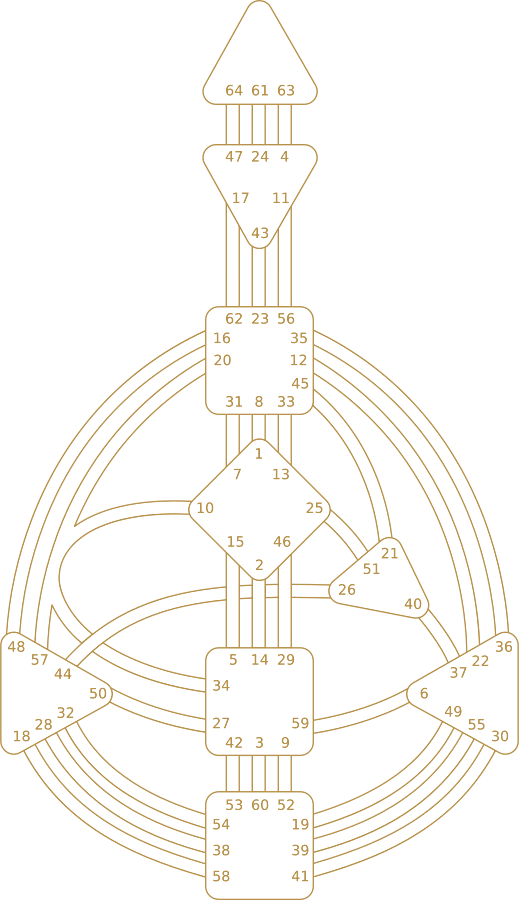

Possibility Perspective in Human Design
Possibility Perspective in Human Design is the lens your awareness looks through, found at the bottom right of the chart. It shapes what you notice about what could be.
This page is for anyone who keeps seeing options, openings, and next steps that others miss, or who wonders why a plain plan can feel too small. It covers what Possibility Perspective means, its two arrow directions, transference, and how the lens appears in work, home, and choices. Start with your free chart below.
Simple way to think about it: Picture a long hallway lined with doors, and a person who cannot walk past one without wondering what room it opens into.
What is Possibility Perspective in Human Design?
Perspective is the lens awareness looks through, and Possibility is the one tuned to what could be. Where another lens settles on what is in front of it, this one keeps noticing the openings around it: other routes, other uses, other ways a thing might turn out. It is a way of seeing, not a plan you made.
In daily life this can sound like a steady stream of what if. A simple errand turns into three possible routes. A job description turns into five things the role could become. You are not trying to avoid the present. The lens simply puts the open spaces in a situation at the front of your attention.
The name does not promise that anything will happen. It describes where attention goes, not what the world will deliver. A possibility noticed is only noticed. Like every Perspective, it sits on the Personality side of the chart, which is the mind and what you are aware of.
Possibility Perspective at a glance
| Variable | Perspective, also called View, one of the four Variables. It is the arrow at the bottom right of the chart, on the Personality side. |
|---|---|
| The six | Survival, Possibility, Power, Wanting, Probability and Personal. |
| Arrow left | Focused: active, strategic and focused. |
| Arrow right | Peripheral: receptive, passive and peripheral. |
| Transference | Probability, the Perspective three steps away. |
| Works with | Your Strategy and Authority. Perspective supports them and never replaces them. |
Is your Perspective Possibility? Start with your free chart
Enter your birth date, time and place. Your free chart shows your Perspective as a number beside the bottom right arrow.
Reading the arrows in your free chart. Four small arrows sit beside the head of the chart, each with a big number. The big number beside the bottom right arrow is your Perspective: 1 Survival, 2 Possibility, 3 Power, 4 Wanting, 5 Probability and 6 Personal, and the arrow shows left or right. Left is Focused and right is Peripheral. Your Human Design reading names your Perspective and says which way its arrow points.
Focused or Peripheral: which way your arrow points
Possibility Perspective has no side names. The arrow at the bottom right of the chart points left (Focused) or right (Peripheral). Left is active, strategic and focused. Right is receptive, passive and peripheral. The direction does not change that your lens is about what could be. It changes how your attention travels while it looks at the openings.
Arrow pointing left (Focused)
A Possibility Perspective with the arrow pointing left (Focused) goes after one opening at a time. You pick an idea and explore it on purpose: what could this become, who else could use it, what would the next step be? Attention stays with that thread and follows it to the end of what it might offer. This can look like someone who thinks a single idea all the way through, or who keeps asking one more what if until a clear path appears. Left is active and strategic, so the exploring is chosen.
Arrow pointing right (Peripheral)
A Possibility Perspective with the arrow pointing right (Peripheral) notices openings from all sides, and it does so passively. You do not go looking. Options show up while you do something else: a conversation hints at a new use for a skill, a walk past a shop suggests a different plan. Right is receptive and peripheral, so many small openings may sit in view at once, and the ones that matter tend to stand out as you let them gather.
When Possibility slips into Probability: transference
Transference for Possibility Perspective is Probability Perspective, the one three steps away. When your mind is conditioned away from its own lens, it can run on Probability instead. Attention shifts from what could be to how likely it is, and a lot of time goes to weighing odds and asking what usually happens. Ideas may get set aside before they have been explored. To notice it, ask yourself whether you are looking at openings or at likelihood. This is a pattern to observe without judgment. Probability is simply not your lens.
Read the Probability Perspective guide to see what that lens looks like when it is someone's own.
Why Possibility Perspective can surprise you
Possibility Perspective can sound like positive thinking. It is not. The lens notices openings, and some of them may be unwelcome ones. It is also not the same as Hope Motivation, which sits on the top right arrow and names what moves the mind. This lens sits at the bottom right and describes how awareness looks. Other sites use other words for it. To test it gently, notice for a week whether your first thought about a new situation is what it is, or what it could be.
What Possibility Perspective notices first
You tend to notice first what is not yet there: the missing step that could be added, the second use of a tool, the route nobody has tried. In a conversation you may hear the opening inside a complaint. Others may notice what is already established, who is involved, or what has been tried, and you may overlook those until someone mentions them. These are just different first notices. A useful habit is to ask a person with another lens what they see, then set it beside your own.
Try it this week
Possibility Perspective at work
At work, Possibility Perspective often shows up as the person who sees another way. In meetings you may offer a different use for a project, a new order for the steps, or an idea that connects two teams. In learning, you may skip ahead to ask where a skill could lead. In planning, you tend to leave doors open, and you may feel boxed in when a plan has only one path.
Work sometimes asks for the opposite: one fixed answer and no detours. When that happens, say what you are noticing in plain words, such as that there may be another route worth a minute. Offer it as one view, not a correction. It also helps to write your openings down and pick one to bring forward. A short list is easier for others to hear than a stream, and it keeps a good idea from being lost.
Possibility Perspective at home
At home, Possibility Perspective may show up in how you see your space. A spare corner becomes a reading nook, a pile of boxes becomes a project, and a free evening becomes five different evenings. You may rearrange a room just to see how it feels, or keep a list of things you might try. Home may feel most comfortable when it has room for change. The risk is a house full of half-started ideas, so choose which ones deserve a weekend.
Possibility Perspective in relationships and family
Someone whose Perspective is different may notice what is, while you notice what could be. A partner may value the plan as it stands, and your next idea can feel like a criticism. It is not meant as one. Say that you are noticing an opening, not asking to change anything today. Ask what they see in the plan as it is. Some friends and family will find you hard to pin down, and some will be glad of your ideas. Listening to their view before sharing yours goes a long way.
Decisions and plans
Possibility Perspective colors the way you weigh choices by showing you options others may not see, and by making a single path feel small. That can help, and it can also stretch a decision out. These notes sit beside your Strategy and Authority, not above them. Use your Strategy and Authority to decide. Use your Perspective to understand why you keep seeing more routes, and to name which ones you actually want to look at.
When you feel off track
You may be running on someone else's lens if you keep asking how likely an idea is before you have looked at it, or if you feel unable to see any openings at all. Ideas may feel flat and the odds may seem to decide everything. A gentle way back is to pick one situation and ask what else it could be, without judging the answers. Notice whether the question brings back a sense of room. If so, you are likely back on your own lens.
Possibility Perspective by Type
Your Type and its Strategy come first. Here is how each Type can work with Possibility Perspective day to day.
Possibility Perspective for a Generator
Strategy: To respond. A Generator with Possibility Perspective may see many things worth working on. Your steady energy for what you love can make one of those openings stand out over time. Notice which ideas you keep returning to, and which ones fade when the first excitement is gone.
Possibility Perspective for a Manifesting Generator
Strategy: To respond, then inform before acting. A Manifesting Generator with Possibility Perspective may move between many openings quickly, and the pace can feel like scattering. Rather than calling it a flaw, notice how the lens and the speed work together. A short list of what you tried can show the thread running through it.
Possibility Perspective for a Projector
Strategy: Wait for the invitation. A Projector with Possibility Perspective may see openings in other people and in systems that nobody has pointed out. Share them when they are wanted and offer them as one view. Your sense of what could be can help others, and it is also a way to understand your own path.
Possibility Perspective for a Manifestor
Strategy: Inform before you act. A Manifestor with Possibility Perspective may see many openings and move on one of them without waiting. Others often want to know what you have in mind, so saying which opening you are following can make the move easier for them. Notice whether the idea is yours or borrowed.
Possibility Perspective for a Reflector
Strategy: Wait a lunar cycle. A Reflector with Possibility Perspective may notice different openings in different places and with different people, so the lens can feel shifting. A setting may be full of options one day and bare the next. Give yourself time and a few different settings before you decide which openings are yours. Watch what you notice first over many days.
What people with Possibility Perspective often hear
All six Human Design Perspective guides
Each one has its own guide. The Human Design Perspective overview explains how they fit together.
Next steps
Run your free chart for your Type, Strategy and Authority, then spend a week noticing where your mind goes first. Keep your Strategy and Authority first, and let your Perspective add detail to them.
FAQ: Possibility Perspective in Human Design
What is Possibility Perspective in Human Design?
Possibility Perspective is one of six Perspectives, the lens your awareness looks through. It sits at the bottom right of the chart, on the Personality side. It tunes attention toward openings, options, and what a thing could become. It is a way of looking, not a belief or a plan.
What does the arrow direction change in Possibility Perspective?
The arrow points left (Focused) or right (Peripheral). Left is active, strategic and focused, so you follow one opening on purpose. Right is receptive, passive and peripheral, so openings gather around you from many sides. Both notice what could be. Neither ranks above the other.
How do I know if my Perspective is Possibility?
Start with your free chart, which gives you your Type, Strategy and Authority. A Human Design reading has a section that names your Perspective and says which way your Perspective arrow, at the bottom right of the chart, points. Left is called Focused and right is called Peripheral.
What is transference in Possibility Perspective?
Transference is the not-self pattern. For Possibility Perspective, the mind may run on Probability Perspective, the one three steps away. Attention then moves from what could be to how likely it is. Noticing it is enough, and nothing needs fixing.
Does Possibility Perspective mean I always see the bright side?
No. The lens notices openings, and they are not always pleasant ones. It describes where attention goes, not how you feel about what you see. You can notice an opening and decide it is not for you. Noticing and choosing are two separate steps.
Is Possibility Perspective a belief or an opinion?
No. It is the lens awareness runs on. A belief is something you decide to hold, and an opinion is something you say. A lens is how you take things in before either one forms. You can test it by noticing what stands out first in many different situations.