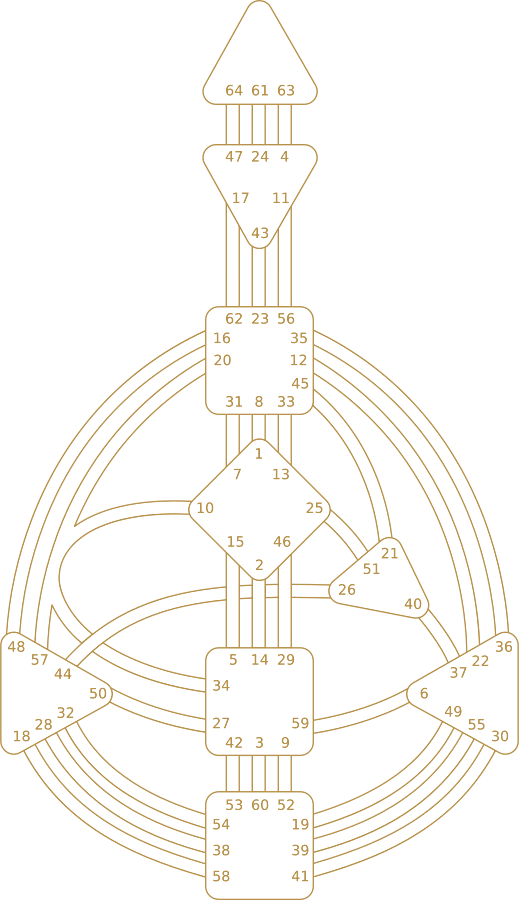

Power Perspective in Human Design
Power Perspective in Human Design is the lens your awareness looks through, found at the bottom right of the chart. It shapes what you notice about who decides and how things are arranged.
This page is for anyone who notices roles, rules, and who has the final say almost as soon as they walk into a room. It covers what Power Perspective means, its two arrow directions, transference, and how the lens appears at work, at home, and in choices. Start with your free chart below.
Simple way to think about it: Imagine walking into a meeting and noticing, before anyone speaks, which seat is at the head of the table and who has the keys to the room.
What is Power Perspective in Human Design?
Perspective is the lens awareness looks through, and Power is the one tuned to how things are arranged. It notices who decides, who answers to whom, which rules are written down and which are simply understood. It is a way of seeing structure, not a wish to be in charge.
In daily life this can look like a quick read of a room. You may see who people turn to when a question comes up, which roles overlap, and where a decision is waiting for someone to make it. Others may call this sharp. For you it is just what is easy to see, the way a floor plan is easy to see from above.
The name is about structure and influence, not about strength or rank. Someone with this lens may be quiet, direct, or anywhere between. They simply pay attention to arrangements. Like every Perspective, it sits on the Personality side of the chart, the mind and what you are aware of.
Power Perspective at a glance
| Variable | Perspective, also called View, one of the four Variables. It is the arrow at the bottom right of the chart, on the Personality side. |
|---|---|
| The six | Survival, Possibility, Power, Wanting, Probability and Personal. |
| Arrow left | Focused: active, strategic and focused. |
| Arrow right | Peripheral: receptive, passive and peripheral. |
| Transference | Personal, the Perspective three steps away. |
| Works with | Your Strategy and Authority. Perspective supports them and never replaces them. |
Is your Perspective Power? Start with your free chart
Enter your birth date, time and place. Your free chart shows your Perspective as a number beside the bottom right arrow.
Reading the arrows in your free chart. Four small arrows sit beside the head of the chart, each with a big number. The big number beside the bottom right arrow is your Perspective: 1 Survival, 2 Possibility, 3 Power, 4 Wanting, 5 Probability and 6 Personal, and the arrow shows left or right. Left is Focused and right is Peripheral. Your Human Design reading names your Perspective and says which way its arrow points.
Focused or Peripheral: which way your arrow points
Power Perspective has no side names. The arrow at the bottom right of the chart points left (Focused) or right (Peripheral). Left is active, strategic and focused. Right is receptive, passive and peripheral. The direction does not change that your lens is about how things are arranged. It changes how your attention moves while it reads an arrangement.
Arrow pointing left (Focused)
A Power Perspective with the arrow pointing left (Focused) studies arrangements on purpose. You pick a group, a household, or a project and look closely at how it works: who decides what, how work gets passed along, where a rule gets in the way. Attention stays with that one structure until it makes sense. This can look like someone who maps a team on paper, learns the rules of a system carefully, or asks exactly who owns a task. Left is active and strategic, so the reading of structure is chosen.
Arrow pointing right (Peripheral)
A Power Perspective with the arrow pointing right (Peripheral) reads arrangements more loosely and more passively. You do not study a group. The sense of how it is organized comes to you as you spend time in it: the unspoken order of a family dinner, the way a team goes quiet when a certain person enters. Right is receptive and peripheral, so the picture builds slowly from small cues, and you may feel it before you can explain it.
When Power slips into Personal: transference
Transference for Power Perspective is Personal Perspective, the one three steps away. When your mind is conditioned away from its own lens, it can run on Personal instead. Attention shifts from how a group is arranged to how things land for one individual, and a lot of time goes to reading each person's moods and responses. Structure may fade from view. To notice it, ask yourself whether you are looking at the arrangement or at one person's reactions. This is a pattern to observe without judgment. Personal is simply not your lens.
Read the Personal Perspective guide to see what that lens looks like when it is someone's own.
Why Power Perspective can surprise you
Power Perspective is easy to misread. It is not the Channel of Power, which is a different part of the chart. It also does not mean wanting control, being forceful, or ranking above others. The name points to how things are arranged and who decides. Other sites use other words for it. To test it gently, notice for a week what you read first when you enter a group: the mood of each person, or the order of the whole. If it is the order, the lens may fit.
What Power Perspective notices first
You tend to notice first how a group is arranged: who is asked, who waits, which task has no owner, which rule nobody wrote down. In a conversation you may hear who is really being addressed. Others may notice how each person is feeling or what the moment means to them, and you may miss that until someone mentions it. Each is only a first notice, and neither is the whole picture. A useful habit is to ask a person with another lens what they saw, then set it beside your own reading.
Try it this week
Power Perspective at work
At work, Power Perspective often shows up as a clear read of the organization. You may see who truly makes a call, where a project is stuck waiting on someone, and which role has no clear owner. In meetings you may ask who decides before debating what to decide. In learning, you may want to know how a field is organized before diving in. In planning, you tend to assign owners and settle who answers to whom.
Work sometimes asks for the opposite: a loose team with no clear roles, or a plan where everyone is expected to just step in. When that happens, say what you notice in plain words, such as that the plan has no owner for one step. Offer it as a question, not a ruling. It also helps to propose a simple arrangement and invite changes, since people are often glad to have the structure named when it is offered lightly.
Power Perspective at home
At home, Power Perspective may show up in how you notice household order: who sets the schedule, whose rules everyone follows, and which chores have no clear owner. You may feel most at ease when roles are plain and the rules are fair and known. A shared calendar or a chore chart may feel natural to you. The risk is running home like an office, so leave room for moments with no plan and no roles at all.
Power Perspective in relationships and family
Someone whose Perspective is different may notice how each person feels, while you notice how the group is arranged. A partner may be thinking about how a friend took a remark, while you are noticing who made the plans. Both are real. Saying out loud that you are reading the setup, not judging anyone, helps. Ask what they felt in the room and listen fully. Some people will find your reading of rules too exact, and others will be glad of it. A question often lands more gently than a correction.
Decisions and plans
Power Perspective colors the way you weigh choices by asking who decides and how the arrangement will change. You may check who is affected by a decision and who gets a say. These notes sit beside your Strategy and Authority, not above them. Use your Strategy and Authority to decide. Use your Perspective to understand the setting around the choice, and to see who else needs to be part of it before you move.
When you feel off track
You may be running on someone else's lens if you spend most of your attention on how each person is reacting, or if the arrangement of a group stops making sense to you. You may feel pulled to smooth every mood. A gentle way back is to step back and ask one question: how is this group set up, and who decides what? Notice whether the answer arrives clearly. If it does, you are likely back on your own lens.
Power Perspective by Type
Your Type and its Strategy come first. Here is how each Type can work with Power Perspective day to day.
Power Perspective for a Generator
Strategy: To respond. A Generator with Power Perspective often notices how work is organized around them. Your steady energy for what you love can find its place faster when you can see who decides what. Pay attention to whether the structure you are reading belongs to you or to someone else's plan.
Power Perspective for a Manifesting Generator
Strategy: To respond, then inform before acting. A Manifesting Generator with Power Perspective may move quickly and still read the arrangement of a room. The speed and the lens can pull apart when roles are unclear, so a moment to ask who owns a step can save time. Notice which steps you skip and which you refuse to skip.
Power Perspective for a Projector
Strategy: Wait for the invitation. A Projector with Power Perspective may see clearly how a team is set up and where it is stuck. Share that reading when it is welcome, and offer it as one view. Your sense of arrangement can help others, and it is also a way to understand yourself.
Power Perspective for a Manifestor
Strategy: Inform before you act. A Manifestor with Power Perspective may read a room and move on it without asking. Others often want to know how you see the setup, so saying who you think decides can make your moves easier to follow. Notice whether the reading is yours or taken from someone else.
Power Perspective for a Reflector
Strategy: Wait a lunar cycle. A Reflector with Power Perspective takes in many groups, and the lens may feel different in different ones. In one group, the order may stand out. In another, it may blur. Give yourself time and a few different groups before you decide what is yours. Watch what you notice first about how a group is arranged across several days.
What people with Power Perspective often hear
All six Human Design Perspective guides
Each one has its own guide. The Human Design Perspective overview explains how they fit together.
Next steps
Run your free chart for your Type, Strategy and Authority, then spend a week noticing where your mind goes first. Keep your Strategy and Authority first, and let your Perspective add detail to them.
FAQ: Power Perspective in Human Design
What is Power Perspective in Human Design?
Power Perspective is one of six Perspectives, the lens your awareness looks through. It sits at the bottom right of the chart, on the Personality side. It tunes attention toward who decides, how roles fit together, and how a group is arranged. It is a way of looking, not a wish to lead.
What does the arrow direction change in Power Perspective?
The arrow points left (Focused) or right (Peripheral). Left is active, strategic and focused, so you study an arrangement on purpose. Right is receptive, passive and peripheral, so the sense of order builds from small cues. Both read structure. Neither ranks above the other.
How do I know if my Perspective is Power?
Start with your free chart, which gives you your Type, Strategy and Authority. A Human Design reading has a section that names your Perspective and says which way your Perspective arrow, at the bottom right of the chart, points. Left is called Focused and right is called Peripheral.
What is transference in Power Perspective?
Transference is the not-self pattern. For Power Perspective, the mind may run on Personal Perspective, the one three steps away. Attention then moves from how a group is arranged to how things land for one individual. It is something to notice without judgment. Personal is simply not your lens.
Is Power Perspective the same as the Channel of Power?
No. The Channel of Power is a different part of the chart and has its own meaning. Power Perspective is one of six lenses on the bottom right arrow. Same word, different place. This page is only about the lens and how your attention notices structure.
Is Power Perspective a belief or an opinion?
No. It is the lens awareness runs on. A belief is something you decide to hold, and an opinion is something you say. A lens is how you take things in before either one forms. You can test it by noticing what stands out first in many different situations.