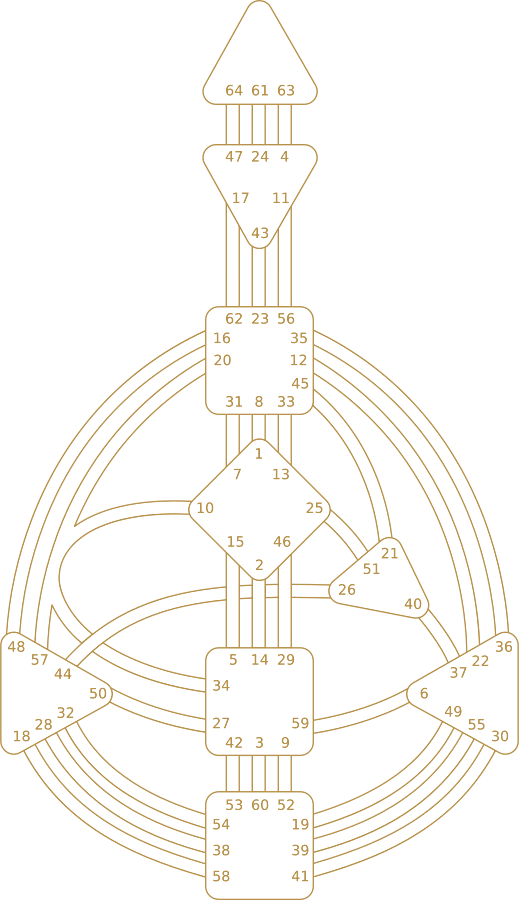

Probability Perspective in Human Design
Probability Perspective in Human Design is the lens your awareness looks through when it weighs what is likely, how things tend to unfold, and what a pattern points toward.
This page is for anyone who found Probability Perspective in a chart, or who wants to compare it with the other five Perspectives. It explains the lens in plain words, what the arrow pointing left (Focused) or right (Peripheral) changes, how it plays out in work, home and relationships, and how to check it gently against your own experience. Start with your free chart below.
Simple way to think about it: Think of a sailor who reads the sky each morning, not to know the day for certain, but to sense which way the wind is likely to turn.
What is Probability Perspective in Human Design?
Perspective is the bottom right arrow on the Personality side of the chart, also called View. It describes the angle your awareness leans toward, not a rule for your choices. There are six Perspectives and each person has one. Probability is the one that reads situations in terms of how they are likely to go.
With this lens, the mind keeps asking what usually follows what. It picks up on repeats, on cause and effect, and on the shape of a situation as it develops. A person may feel an early sense of where a conversation, a plan or a season is heading, long before anything has been said out loud.
It is a way of paying attention, not a forecast machine. The lens does not make you right about the future. It makes you someone whose mind naturally compares what is happening now with what tends to happen next, and that habit colors how you talk and plan.
Probability Perspective at a glance
| Variable | Perspective, also called View, one of the four Variables. It is the arrow at the bottom right of the chart, on the Personality side. |
|---|---|
| The six | Survival, Possibility, Power, Wanting, Probability and Personal. |
| Arrow left | Focused: active, strategic and focused. |
| Arrow right | Peripheral: receptive, passive and peripheral. |
| Transference | Possibility, the Perspective three steps away. |
| Works with | Your Strategy and Authority. Perspective supports them and never replaces them. |
Is your Perspective Probability? Start with your free chart
Enter your birth date, time and place. Your free chart shows your Perspective as a number beside the bottom right arrow.
Reading the arrows in your free chart. Four small arrows sit beside the head of the chart, each with a big number. The big number beside the bottom right arrow is your Perspective: 1 Survival, 2 Possibility, 3 Power, 4 Wanting, 5 Probability and 6 Personal, and the arrow shows left or right. Left is Focused and right is Peripheral. Your Human Design reading names your Perspective and says which way its arrow points.
Focused or Peripheral: which way your arrow points
Perspective has no side names, so there is nothing to look up beyond the arrow. If your Probability Perspective has the arrow pointing left, it is Focused. If it points right, it is Peripheral. Left is active, strategic and focused. Right is receptive, passive and peripheral. Same lens, two different working styles.
Arrow pointing left (Focused)
A Probability Perspective with the arrow pointing left (Focused) tends to follow one line of likelihood all the way through. The mind picks a situation, traces how it is likely to run, and tests that thread with care. Others may see this person as methodical and good at saying what a plan will probably lead to. The lens works like one marked route on a map, traced from start to finish. The strength is depth on the matter at hand. The thing to watch is that one well-traced line can feel like the only line, when other routes are also in play.
Arrow pointing right (Peripheral)
A Probability Perspective with the arrow pointing right (Peripheral) tends to sense the general drift of many situations at the same time. The mind takes in hints from around the edges, such as a tone in an email, a change in routine, or a repeated remark, and forms a loose, wide picture of what is likely. The lens is like a weather map showing several systems at once. The strength is breadth and flexibility. The thing to watch is that so many likely outcomes can blur together, which may make it harder to say what you expect.
When Probability slips into Possibility: transference
When the mind is conditioned away from its own Perspective, it tends to run on the one three steps away. For Probability, that is Possibility. The mind then asks what else could happen, what new thing might open up, and may set aside its natural reading of what usually follows. This can feel like a lot of ideas with little sense of which are realistic, or like excitement that fades without a pattern to hold it. It is not a failure. The other lens is just not yours. To notice it, watch whether you are scanning for options when your mind would normally be weighing likelihood.
Read the Possibility Perspective guide to see what that lens looks like when it is someone's own.
Why Probability Perspective can surprise you
The word Probability can sound like math, odds and numbers. It is not about figures at all. It is a plain name for the lens, and it does not mean you are good at statistics or that you should predict things. It also does not mean you are pessimistic or cautious by nature, since likely outcomes can be good ones. Other sites may use other labels for this arrow. To test it gently, notice over a week how often your first reaction to a new plan is a sense of how it will probably go, and write down what actually happened.
What Probability Perspective notices first
With Probability Perspective, you tend to notice patterns, repeats and the way one event sets up the next. You may say things like last time this led to that, or it usually goes this way. Others may notice what is unusual, what is new, or how a moment feels to a particular person, which you can miss. You might ask how long something will take, what comes after, and what a decision tends to lead to. Try noticing which patterns catch your attention before anyone else mentions them.
Try it this week
Probability Perspective at work
At work, Probability Perspective often appears as a sense of where a project is headed. You may be the one who says that a timeline looks short, that a request tends to snowball, or that a certain approach usually works. In meetings, you may offer an early read on how a plan will probably land. With the arrow pointing left (Focused), the read is often detailed and sequenced. With the arrow pointing right (Peripheral), it is often a broad sense of direction.
When a job asks you to ignore the pattern, such as launching something with little history to go on, you can still use your lens. Name what you expect, mark it as a guess, and plan a check-in to compare. This lets your noticing be useful without turning it into a fixed prediction that others feel they must argue with or accept.
Probability Perspective at home
At home, Probability Perspective may show up as a feel for how routines tend to run. You might know that the morning will be rushed if one thing slips, or that a certain guest always stays late. This can make your space feel steady and well timed. It can also make you expect the same old result and miss a day that goes differently. A simple practice is to keep a small notebook of what usually happens, then add a line when the day surprises you. Over time the notes show both the pattern and the exceptions.
Probability Perspective in relationships and family
With a partner, friend or family member whose Perspective is different, the contrast may show in how you talk about plans. You might say that it will probably go a certain way, while the other person is thinking about what could be new, what matters to them personally, or what is at stake. Neither lens is wrong. It helps to say that your read is a guess and to ask for theirs. A phrase like here is how I think it tends to go, what do you see? opens a conversation instead of closing one.
Decisions and plans
When you weigh a choice, Probability Perspective colors the first step: you picture how each option will likely play out. That picture is useful input and it is only input. Your Strategy and Authority decide what to do. Try writing down the likely result of each choice, then check it with your Authority rather than letting the pattern settle the matter. If the likely outcome and your Authority seem to disagree, give the decision more time.
When you feel off track
You may be running on someone else's lens if you feel scattered among new ideas and cannot say what is likely, or if you start to feel that nothing follows from anything. Plans may feel exciting yet hard to trust. A gentle way back is to pick one recent event and trace how it came about, step by step. Doing this a few times can bring back the sense of how things tend to run.
Probability Perspective by Type
Your Type and its Strategy come first. Here is how each Type can work with Probability Perspective day to day.
Probability Perspective for a Generator
Strategy: To respond. A Generator with a Probability lens may sense where a task is likely to lead, which can help in picking what to give energy to. The lens offers the read, and your Strategy still gives the answer. A good guess about the future is not yet a yes from your gut.
Probability Perspective for a Manifesting Generator
Strategy: To respond, then inform before acting. A Manifesting Generator with this lens may see the likely path quickly and want to skip ahead. The read is helpful, though your own Strategy decides which steps to take and which to drop. Speed in noticing does not have to mean speed in committing.
Probability Perspective for a Projector
Strategy: Wait for the invitation. A Projector with Probability Perspective may see how another person's plan will probably unfold. That read is a way of noticing, and it works well when offered at a moment others welcome it. Sharing it too early can feel like a prediction nobody asked for.
Probability Perspective for a Manifestor
Strategy: Inform before you act. A Manifestor with this lens may have a strong sense of where an action is likely to lead. The lens paints the picture only in your own head, so hold the picture loosely, while your Strategy and Authority guide the move itself.
Probability Perspective for a Reflector
Strategy: Wait a lunar cycle. A Reflector with Probability Perspective may notice patterns in a place or a group that shift as the surroundings shift. The lens stays steady while the setting changes, so it can help to watch your readings across a few weeks before treating a single reading as your own.
What people with Probability Perspective often hear
All six Human Design Perspective guides
Each one has its own guide. The Human Design Perspective overview explains how they fit together.
Next steps
Run your free chart for your Type, Strategy and Authority, then spend a week noticing where your mind goes first. Keep your Strategy and Authority first, and let your Perspective add detail to them.
FAQ: Probability Perspective in Human Design
What is Probability Perspective in Human Design?
Probability Perspective is one of six Perspectives, the bottom right arrow on the Personality side of the chart. It describes the lens your awareness leans on, which tends to weigh what is likely, how things unfold, and what a pattern points toward.
What does the arrow direction change in Probability Perspective?
The arrow points left (Focused) or right (Peripheral). Left is active, strategic and focused, so the mind tends to trace one likely path in detail. Right is receptive, passive and peripheral, so it tends to sense the general drift of many situations at once.
How do I know if my Perspective is Probability?
Start with your free chart, which gives you your Type, Strategy and Authority. A Human Design reading has a section that names your Perspective and says which way your Perspective arrow, at the bottom right of the chart, points. Left is called Focused and right is called Peripheral.
What is transference in Probability Perspective?
Transference is the pattern the mind runs on when it is conditioned away from its own lens. For Probability, that is Possibility, which asks what else could happen. It is something to notice with curiosity. The other lens is not lesser, just not yours.
Does Probability Perspective mean I can predict things?
No. It notices patterns and likely paths, and that is all it does. You may often sense where things are heading, and you can still be wrong. Treat each reading as a good guess and check it against what happens.
Is Probability Perspective a belief or an opinion?
No. It is the lens awareness runs on, not something you decide to think. Opinions are built from what you notice, and the lens shapes what you notice first. That is why two people can look at one plan and describe different things.