
Raising a Child Whose Design Is Nothing Like Yours
Children with open centers absorb the household. What changes per Type, the moments it matters, and why your own chart is part of it.
On this page
You had a plan for how this would go. Most of it was built out of what worked on you.
Then the child turned up running on completely different equipment.
The most useful thing in the whole system, for parents
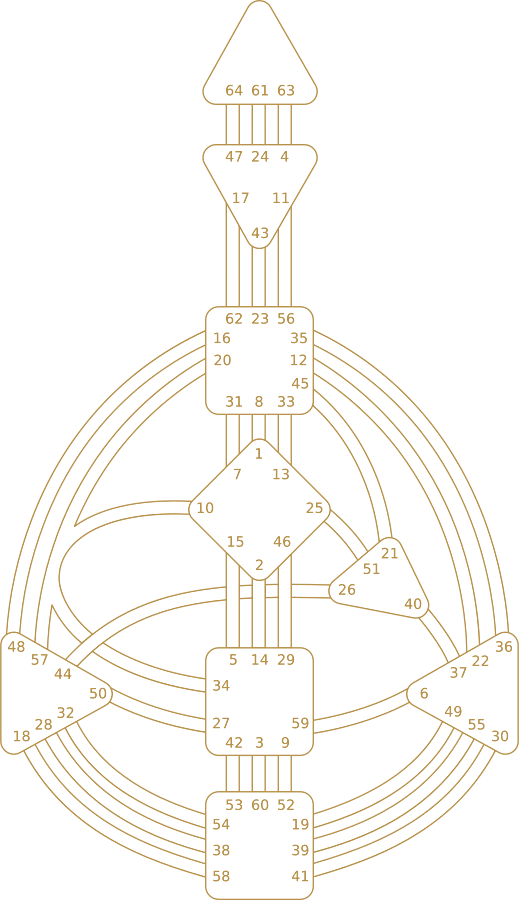
Not the Type. The open centers.
An open center takes in whatever is nearby and turns it up. For a child, whatever is nearby is mostly you.
So a child with an open Solar Plexus in a house where an adult is stressed is not having their own feeling. They are having a louder version of yours, and they have no way to know that.
A child with an open Root in a rushed house feels a pressure to hurry that did not start with them, and it becomes their normal.
Small children do not filter. They take in the room and then get asked why they are being like this.
Type differences that cause the most friction
A Generator child needs to respond. Asking "what do you want for dinner" gets a blank. Offering two actual options gets an immediate answer. That one change removes a whole class of daily argument.
A Manifesting Generator child starts things and leaves them, moves fast, skips steps. Most of that is correct for the design. The useful thing is asking them to say what they are switching to, rather than making them finish everything they start.
A Projector child does not have the energy of the other children and gets compared to them constantly. They also see things adults have not said out loud, which reads as clever or as mouthy depending on the adult.
A Manifestor child acts without asking. This is the one most likely to get punished out of a child, and the anger a Manifestor carries as an adult usually starts here. Asking them to tell you first, rather than ask permission, changes the whole thing.
A Reflector child is a barometer for the house. If they are struggling, look at the household before looking at the child.
The thing worth not doing
Turning it into a label.
A child told they are a Projector and should not be expected to keep up has been handed a ceiling. A child told they are a Manifestor and can do what they like has been handed something worse.
Nearly all the value here is in how the adults behave. A parent who knows their child needs to respond starts offering options without thinking about it. The child never needs the vocabulary.
Same with school. A profile that learns by breaking things is not a diagnosis to hand a teacher.
What it changes about the hard moments
Mostly it changes the question you ask.
Instead of why are they being like this, try: is this theirs, and what does this design actually need right now.
A meltdown at the end of a busy day, from a child with several open centers, is often a full day of absorbed energy landing at once. Not defiance. Overflow.
The response is different. Less room, fewer people, quiet. Not a conversation about behavior.
Ask whose feeling it is before asking what to do about it.
Three moments where this changes what you do
The end of a school day. A child who has absorbed thirty other children arrives home full. What looks like defiance in the first twenty minutes is often overflow. Less talking, fewer questions, and somewhere quiet works better than a conversation about behavior.
Being asked to decide. Open questions land badly on most children and on Generators especially. "What do you want to do" gets nothing. "This or that" gets an answer straight away.
When they say no and mean it. A child with a clear body response is not being difficult. They are doing the thing adults spend decades trying to relearn. Worth taking seriously even when the answer is still no from you.
What to do with your own chart
The part parents skip.
If your child has an open center and you have that center defined, you are the main thing they are absorbing. Your stress is their stress, at a higher volume, and they cannot tell it apart.
That is not a reason for guilt. It is a reason to notice which of you is generating the mood in a difficult evening.
It also means that the most useful thing you can do for a child with open centers is often to sort out your own state rather than to manage theirs.
An honest limit
This needs saying plainly, because parenting is where this material gets stretched furthest.
A chart does not diagnose anything. If a child is struggling in a way that worries you, that is a conversation for a doctor, a teacher, or someone who can actually assess them. Not a chart, and not this page.
Human Design does not override safety, limits, or ordinary parenting either. Knowing a child is a Manifestor explains why being told no lands hard. It does not mean the no goes away.
The useful version stays small. It changes how you read a difficult evening, and it makes you slower to decide something is wrong with them.
Where to go from here
- Generate their chart, using the birth time from hospital records if you have it
- Defined and undefined centers
- The five Types
- Boundaries for open centers
- Living with someone whose chart is nothing like yours
Frequently asked questions
Can you calculate a child's Human Design chart?
Yes, using their birth date, time and place, the same as an adult chart. Birth time matters as much for a child as for anyone, and hospital records are usually the most accurate source.
How do open centers affect children?
A child with open centers takes in and amplifies the energy of the people around them, most often their parents. Much of what looks like a child's own emotion or urgency may be what they are picking up from the household.
Should you tell a child their Human Design type?
The system is more useful for how adults treat the child than as a label for the child to carry. Knowing a child needs to respond rather than be pushed changes parenting behavior without the child needing the vocabulary.
Want to go deeper?
A free chart shows their Type and which centers are open. What that means for your particular household takes reading both charts.
Get your personalized Human Design reading: 60+ sections written from your exact chart, all 27 workbooks, 40 meditations, a 24-lesson course, two recordings, a Self-Discovery Notebook, and Jessica, an AI guide who knows your design. Yours for life.
