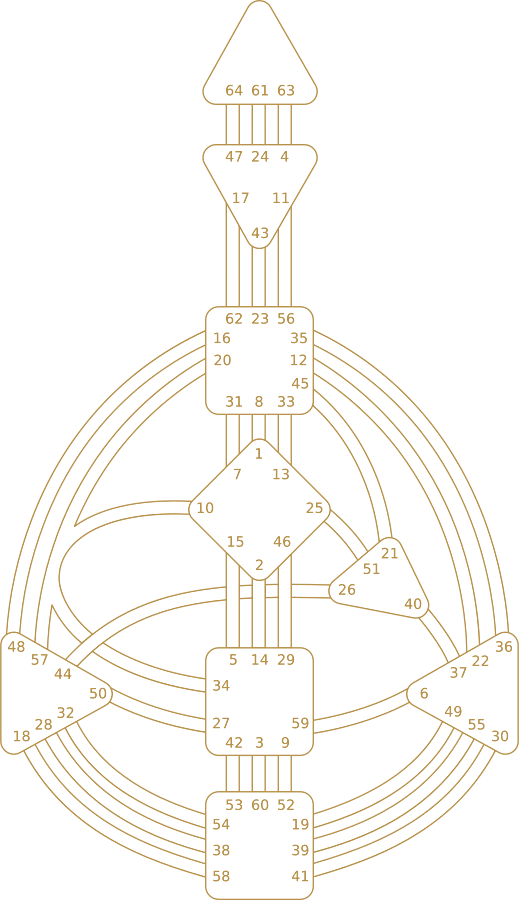

Valleys Environment in Human Design
The Valleys Environment in Human Design is the setting where information, people, and conversation move close by, so you can stay in touch with what is going on around you.
This page is for anyone whose chart names Valleys as their Environment, or who wants to know what that means. It covers what Valleys is, its two sides, Narrow Valleys and Wide Valleys, how to find yours, and small ways to use it in everyday life. Find your Environment in your free chart below.
Simple way to think about it: Think of a small town where everyone walks the same streets. You hear the news at the corner, you wave to neighbors, and you always know what is happening nearby.
What is the Valleys Environment in Human Design?
Valleys is about pathways, closeness, and where information moves. Many people with this Environment feel at ease when they are connected to the people and news around them. Talk with neighbors, short walks, and easy contact can all keep you in touch with what is moving through your day.
These places can help you listen. You may notice small things that others miss, like a change in mood or a new pattern in your area. Valleys often fits settings where people can talk, share, and pass things along without much effort.
Being cut off from all of that can feel flat or lonely. A place with no easy contact, poor signal, or no one nearby may leave you feeling out of touch. The goal is not constant noise. It is staying close enough to hear what you need to hear.
Valleys at a glance
| Variable | Environment, one of the four Variables. It is read from the arrow at the bottom left of the chart, on the Design side. |
|---|---|
| Environment | Valleys, one of six: Caves, Markets, Kitchens, Mountains, Valleys and Shores. |
| Left side | Narrow Valleys. The arrow points left: active, strategic and focused. |
| Right side | Wide Valleys. The arrow points right: receptive and more peripheral. |
| Works with | Your Strategy and Authority. Environment supports them and never replaces them. |
Is your Environment Valleys? Find it in your chart
Enter your birth date, time and place. Your free chart shows your Environment as a number beside the bottom left arrow.
Reading the arrows in your free chart. Four small arrows sit beside the head of the chart, each with a big number. The big number beside the bottom left arrow is your Environment: 1 Caves, 2 Markets, 3 Kitchens, 4 Mountains, 5 Valleys and 6 Shores, and the arrow shows left or right. For Valleys, left is Narrow Valleys and right is Wide Valleys. Your Human Design reading names your Environment and says which way its arrow points.
Narrow vs Wide Valleys
Every Environment has two sides, and the direction of your arrow decides which one is yours. In Valleys, the two sides are Narrow Valleys and Wide Valleys. Both like being close to the flow of information. They differ in how much of it you want to take in at once.
Narrow Valleys (left)
Narrow Valleys leans toward a focused, chosen flow of contact. If this is your side, you may like a small, steady circle of people and a few clear sources of news, rather than a crowd of voices. You may feel most at ease when you pick who you stay connected to and what you tune in to, so the information that reaches you feels useful and easy to follow.
Wide Valleys (right)
Wide Valleys leans toward an open, receptive flow of contact. If this is your side, you may like having a lot going on around you and many people and sources within reach. You may feel most at ease in busy neighborhoods or places where things pass by, and you can take in what comes without having to go looking for it.
Why Valleys can surprise you
You may read Valleys and think, but I like my alone time. That is fine. Valleys is not about being in a crowd all day. It is about staying close to the flow of news, talk, and people, in a way that fits you. Some people only notice it when they move somewhere quiet and feel oddly out of touch. To test it, try one week. Take a short walk on your street each day, say hello to someone, and see how your mood feels. If nothing shifts, let it go. Never force it.
What Valleys feels like
Valleys in real life
Valleys often shows up in neighborhood streets, walkable communities, local gathering places, and spaces where people talk. It can also be a front porch, a shared kitchen table, a small shop where people know each other, or a team space where news moves quickly. Any setting where information and people pass through close by can suit you.
Try it this week
Valleys at work
Work settings that tend to fit Valleys keep people and news close by. Think of a shared office, a team table, a shop floor, or a job where you chat with others through the day. Roles with easy back and forth, like quick questions and hallway talk, may feel natural, since you like to hear what is moving around you.
If your job puts you alone in a far corner, add contact on purpose. Set a short check-in with a coworker. Eat lunch where others sit. Keep a group chat open for quick updates. Ask to sit closer to the team if you can. Small, regular points of contact can keep you feeling in the loop.
Your home and your own space
At home, think of pathways and easy contact. A table near the kitchen or front door lets you hear what is happening. A porch chair or window seat that faces the street lets you see neighbors walk by. Keep a spot where people can sit and talk. If you live alone, leave a door open, or call someone while you cook. Try one change for a week, like moving your chair to face the street, and see whether the house feels more alive.
Valleys in relationships and family
Living with someone whose Environment is different works well when each of you can say what helps. You may like doors open and voices nearby. They may want a closed door and quiet. Try giving them a room or corner to close off, and keep one open area for talk. Agree on times when the house is lively and times when it is calm. Check in with each other with a simple question: do you want company right now, or some room?
Where to live and travel
When you look at places to live, look for closeness. A walkable street, friendly neighbors, a corner shop, a park where people meet, or a building with shared spaces can all fit. Check how easy it is to reach the people you care about. Moving house is never required, though. When you travel, stay where you can walk to cafes and markets, chat with locals, and watch the day go by. A busy square or a small shop makes a good first stop.
When you feel drained
When you feel drained or overwhelmed, go to your kind of place. Find a spot where people and news are close, but nothing is pressing on you. Walk a familiar street. Sit on a bench and watch neighbors pass. Call a friend you trust, or visit a small shop where people know you. Let the gentle flow of talk around you slow things down. Many people feel steadier after a little easy contact. Then go back to what you were doing.
If you often feel overwhelmed, talk with a doctor or a licensed professional. Your Environment can support you; it is not a treatment.
Valleys by Type
Your Type and its Strategy come first. Here is how each Type can use Valleys day to day.
Valleys for a Generator
Strategy: To respond. Generators have steady energy to put into daily life. Walkable streets, talk at work, and neighbors close by can give you a feel for what is going on. Use that to notice what draws you in. Pick spots where people gather around things you enjoy.
Valleys for a Manifesting Generator
Strategy: To respond, then inform before acting. Manifesting Generators often move between many things quickly. A busy block or a lively team space can keep you in touch while you jump around. Keep easy contact close, like a group chat or a walkable route, so ideas can flow both ways.
Valleys for a Projector
Strategy: Wait for the invitation. Projectors often learn a lot by watching others. A neighborhood or workplace with easy talk gives you more to notice. Spend time where people share news, and see what stands out. Rest in a quiet corner when it gets to be too much.
Valleys for a Manifestor
Strategy: Inform before you act. Manifestors often act on their own ideas. Valleys can help you stay aware of how people around you are doing. A close neighborhood or team makes it easy to share news. Keep a few trusted people within reach, so your plans do not leave anyone behind.
Valleys for a Reflector
Strategy: Wait a lunar cycle. Reflectors take in their surroundings more than any other Type, so the place you spend time in matters a great deal. With Valleys, the people and talk nearby shape how your day feels. Try a few different neighborhoods or workplaces over several weeks and notice how each one feels. Choose places where the talk is kind and the pace is calm. Step away when the noise gets too loud.
What people with Valleys often hear
All six Human Design Environments
Each Environment has its own guide. The Human Design Environments overview explains how they fit together.
Next steps
Run your free chart to see your Environment, then spend a week noticing which places help you think clearly. Keep your Strategy and Authority first, and let the setting support them.
FAQ: Valleys Environment in Human Design
What is the Valleys Environment in Human Design?
Valleys is one of the six Environments. It is about pathways, closeness, and where information moves. Many people with it feel at ease when they are near people and conversation, and they can stay in touch with what is happening around them.
What is the difference between Narrow and Wide Valleys?
Both sides like staying close to the flow of information. Narrow Valleys leans toward a focused, chosen flow, with a small circle and a few clear sources. Wide Valleys leans toward an open, receptive flow, with lots of people and activity within reach.
How do I know if my Environment is Valleys?
Your free chart shows your Environment as the big number beside the bottom left arrow: 5 is Valleys. The arrow points left for Narrow Valleys and right for Wide Valleys. A Human Design reading names your Environment and says which way the arrow points.
Does Valleys mean I have to live in a town?
No. Moving house is never required. You can bring in the same feeling with small steps, like walking local streets, chatting with neighbors, joining a nearby group, or keeping steady contact with people you trust.
What can feel draining with Valleys?
Many people with Valleys find isolation tiring. Living far from others, having poor signal, or sitting in a place where nothing and no one passes by can leave you feeling out of touch. A little regular contact can help.
Can I have more than one Environment that feels right?
Yes. Your chart names one Environment, but that does not make other places wrong. Many people feel good in a few kinds of settings. Think of Valleys as a good place to start. Notice where else you feel at ease, and keep those places too.