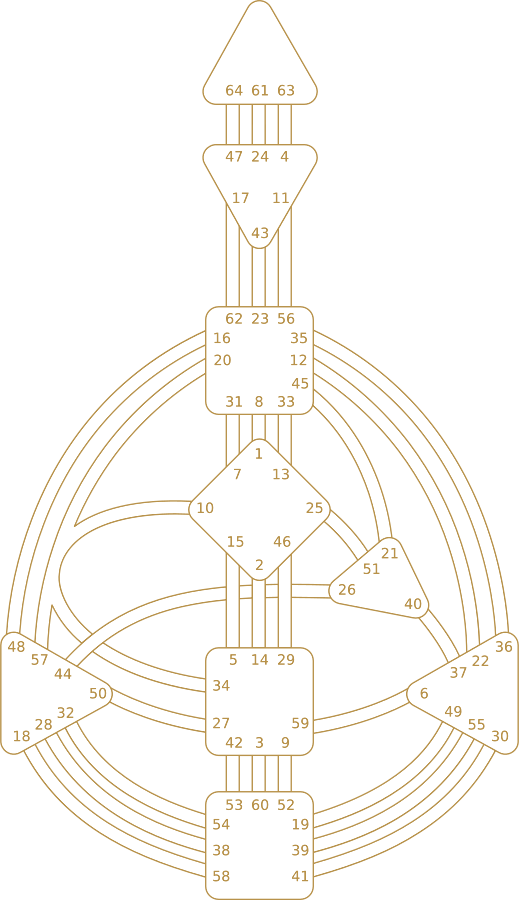

Shores Environment in Human Design
The Shores Environment in Human Design is the setting at an edge, where two different places meet, such as land and water, or a busy area and a calm one.
This page is for anyone whose chart names Shores as their Environment, or who wants to know what that means. It covers what Shores is, its two sides, Natural Shores and Artificial Shores, how to find yours, and small ways to use it in daily life. Find your Environment in your free chart below.
Simple way to think about it: Think of standing on a beach. Behind you is the town, in front of you is the water, and you get a little of both without being lost in either.
What is the Shores Environment in Human Design?
Shores is about edges, thresholds, and the meeting point between two different settings. Many people with this Environment feel good at the boundary between worlds. It can be land and water, but it can also be city and suburb, public and private, or busy and calm.
The pull is toward contrast. You may notice that you feel more alive and balanced near an edge than deep inside one extreme. A place with a little of this and a little of that can leave you feeling steady and clear.
Being stuck deep inside only one kind of place, with no change of scene, can feel heavy. Shores does not ask you to live at a beach. It points to the value of having an edge nearby: a spot where one part of life ends and another begins.
Shores at a glance
| Variable | Environment, one of the four Variables. It is read from the arrow at the bottom left of the chart, on the Design side. |
|---|---|
| Environment | Shores, one of six: Caves, Markets, Kitchens, Mountains, Valleys and Shores. |
| Left side | Natural Shores. The arrow points left: active, strategic and focused. |
| Right side | Artificial Shores. The arrow points right: receptive and more peripheral. |
| Works with | Your Strategy and Authority. Environment supports them and never replaces them. |
Is your Environment Shores? Find it in your chart
Enter your birth date, time and place. Your free chart shows your Environment as a number beside the bottom left arrow.
Reading the arrows in your free chart. Four small arrows sit beside the head of the chart, each with a big number. The big number beside the bottom left arrow is your Environment: 1 Caves, 2 Markets, 3 Kitchens, 4 Mountains, 5 Valleys and 6 Shores, and the arrow shows left or right. For Shores, left is Natural Shores and right is Artificial Shores. Your Human Design reading names your Environment and says which way its arrow points.
Natural vs Artificial Shores
Every Environment has two sides, and the direction of your arrow decides which one is yours. In Shores, the two sides are Natural Shores and Artificial Shores. Both like edges and contrast. They differ in what kind of edge feels like home to you.
Natural Shores (left)
Natural Shores leans toward edges found in the land itself. If this is your side, you may feel most at ease where nature meets something else, like a lake shore, a river bank, a field next to a town, or a trail at the edge of a city. You may seek out these places on purpose, and feel more settled once you are there.
Artificial Shores (right)
Artificial Shores leans toward edges made by people. If this is your side, you may feel most at ease where built places meet each other, like a city block that turns quiet, a plaza between buildings, a waterfront promenade, or a neighborhood that sits between two districts. These edges can feel natural to you, and you may settle into them with little effort.
Why Shores can surprise you
You may read Shores and think, but I do not even like the beach. That is fine. Shores is not about sand and water. It is about edges, where two different kinds of places meet. Many people only notice it when they feel restless in one place all day, then perk up on a quiet street off a busy one. To test it, try one week. Spend ten minutes each day at an edge, like a park border, a doorstep, or a bridge. Notice how you feel. If nothing changes, drop it.
What Shores feels like
Shores in real life
Shores often shows up in beach towns, city edges, border neighborhoods, and places between nature and urban life. It can also be small, like a porch between house and yard, a bench where a park meets a street, or a desk that sits between a busy room and a quiet one. Any setting where two places meet can suit you.
Try it this week
Shores at work
Work settings that tend to fit Shores have a bit of contrast built in. Think of a desk between a busy room and a quiet one, a job that mixes indoor and outdoor time, or a role that moves between two kinds of tasks. A building with a courtyard, or an office near a park, gives you an edge to step to.
If your job keeps you in one kind of place all day, add a change of scene. Step outside at lunch. Move between two rooms for different tasks. Sit by a door or a window that looks onto a different space. Plan one short walk to an edge, like a path or a courtyard, so the day does not feel flat.
Your home and your own space
At home, think of thresholds. A porch chair, a seat in a doorway, or a bench by the back door can give you an edge between inside and out. A window seat that looks between a quiet yard and a busy street works too. If your home is small, make two zones in one room: a calm side and a lively side. Try one change for a week, like moving a chair to a doorway, and notice how it feels.
Shores in relationships and family
Living with someone whose Environment is different goes well when you plan for it together. You may like to drift between rooms, or between inside and outside. They may want to stay in one cozy spot all day. That is fine. Give each person a space that suits them, and share an in-between spot, like the porch or the hallway, where you can meet. Talk about what each of you needs when the house feels too much the same, or too busy.
Where to live and travel
When you look at places to live, look for edges. That could be a home near a park, a street where a busy road turns quiet, a neighborhood between two districts, or a house with both a yard and a view of the street. If it is close to water, great, but a plain border is enough. Moving house is never required, though. When you travel, stay near a spot where two settings meet, like a waterfront, a market edge, or a hilltop where town meets country.
When you feel drained
When you feel drained or overwhelmed, go to your kind of place. Find an edge, even a small one. Walk to the line where a park meets the street. Sit on a doorstep, a bridge, or a bench by the water. Stand where two places meet, and watch both. Let your mind move between the two for a while. Many people feel steadier after some contrast. Then return to your day with fresh eyes.
If you often feel overwhelmed, talk with a doctor or a licensed professional. Your Environment can support you; it is not a treatment.
Shores by Type
Your Type and its Strategy come first. Here is how each Type can use Shores day to day.
Shores for a Generator
Strategy: To respond. Generators have lots of daily energy to spend. An edge near home or work gives you a place to reset between tasks. Walk to the line between two places and see how you feel. Notice which tasks you enjoy most when you mix up your scenery.
Shores for a Manifesting Generator
Strategy: To respond, then inform before acting. Manifesting Generators often switch between many things. Edges and doorways fit that style, because you can move between two settings quickly. Build a day with changes of scene. A short walk to a border can help you see which task to jump to next.
Shores for a Projector
Strategy: Wait for the invitation. Projectors often take in a lot from the people around them. An edge, like a quiet street off a busy one, gives you a place to step out of the crowd and sort your thoughts. Keep a small threshold spot nearby to rest between work and others.
Shores for a Manifestor
Strategy: Inform before you act. Manifestors often like room to move on their own ideas. An edge gives you two choices at once: stay in the busy side or step to the calm one. Use a doorway or a park border to pause before a big step, and again after, to look back.
Shores for a Reflector
Strategy: Wait a lunar cycle. Reflectors take in their surroundings more than any other Type, so the place you spend time in matters a great deal. With Shores, edges give you a clear view of how two different settings feel. Visit a few borders over several weeks, like a waterfront, a park edge, or a quiet street, and notice how each one feels. Spend more time where the contrast feels gentle. Step back from places that are all one thing.
What people with Shores often hear
All six Human Design Environments
Each Environment has its own guide. The Human Design Environments overview explains how they fit together.
Next steps
Run your free chart to see your Environment, then spend a week noticing which places help you think clearly. Keep your Strategy and Authority first, and let the setting support them.
FAQ: Shores Environment in Human Design
What is the Shores Environment in Human Design?
Shores is one of the six Environments. It is about edges, thresholds, and the meeting point between two different settings. Many people with it feel balanced near a boundary, like land and water, or busy and calm, rather than deep inside one extreme.
What is the difference between Natural and Artificial Shores?
Both sides like edges and contrast. Natural Shores leans toward edges found in nature, like lake shores, river banks, or the line where fields meet a town. Artificial Shores leans toward edges made by people, like waterfront promenades, plazas, or the line between two districts.
How do I know if my Environment is Shores?
Your free chart shows your Environment as the big number beside the bottom left arrow: 6 is Shores. The arrow points left for Natural Shores and right for Artificial Shores. A Human Design reading names your Environment and says which way the arrow points.
Do I need to live by the water with Shores?
No. Moving house is never required. A shore can be any edge, like a park border, a quiet street off a busy one, or a porch between house and yard. Small changes that add contrast to your day can be enough.
What can feel draining with Shores?
Many people with Shores find it tiring to be stuck deep inside only one kind of place. If every day feels the same, with no edge or change of scene, try adding a short visit somewhere that offers contrast.
Can I have more than one Environment that feels right?
Yes. Your chart names one Environment, but that does not make other places wrong. Many people feel good in a few kinds of settings. Think of Shores as a good place to start. Notice where else you feel balanced, and keep those places too.