
Human Design vs Myers-Briggs: What Each Measures
Human Design shows you how to make decisions and when to take action. Myers-Briggs describes how you think and process information.
On this page
- Myers-Briggs sorts your thinking style; Human Design maps your decision-making process and energy pattern.
- Your MBTI type is a preference; your Human Design Type describes a mechanical pattern in your body.
- MBTI answers how you think; Human Design answers when to act and how to decide.
You know your four letters
You took the test at work or online years ago. The letters made sense. You are an INFP or an ESTJ. You read the description and nodded at a few lines. It explained how you recharge or how you make lists or whether small talk drains you.
Then someone mentions Human Design and you wonder if it is the same idea with different names. It is not.
Myers-Briggs measures preferences. Human Design measures mechanics. One tells you how you like to think. The other tells you how your body is built to decide and when it works to act.
What Myers-Briggs measures
The Myers-Briggs Type Indicator sorts sixteen personality types. Each type is four letters. The letters describe how you prefer to take in information and make decisions.
Introversion or Extraversion: where you get energy. Sensing or Intuition: what kind of information you notice first. Thinking or Feeling: how you weigh a choice. Judging or Perceiving: whether you like plans or options.
It is about cognition. It tells you nothing about timing. It does not say when to speak up at the meeting or whether to say yes to the dinner invite tonight. It describes a lens, not a body.
Myers-Briggs explains why you think about it the way you do. Human Design explains the mechanic of deciding.
What Human Design measures
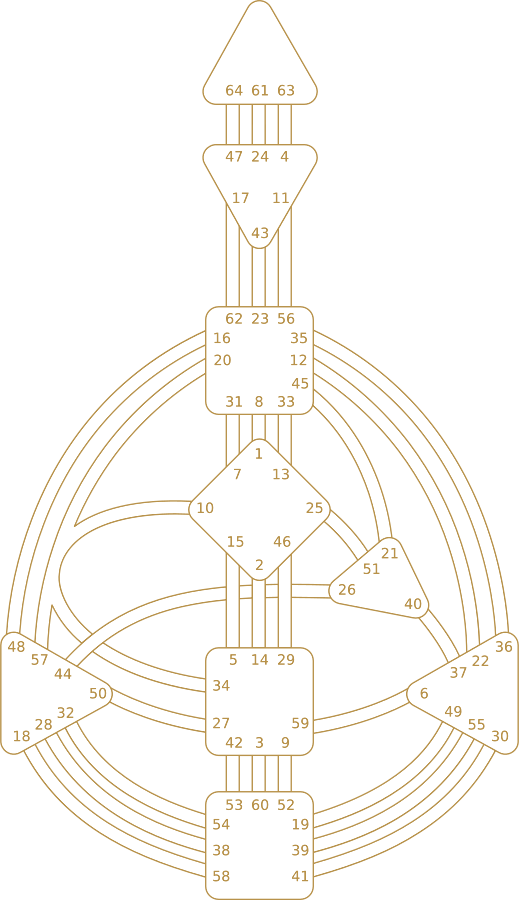
Human Design describes five Types, each with a different energy pattern and a different way of moving through the world. The Type comes from which centers in your chart are defined and which are not.
A Generator has a defined Sacral center. That center is a motor. It creates sustainable energy for work. The Generator's strategy is to respond. That means waiting for something outside yourself to react to before you commit.
A Projector has no defined Sacral. No motor for work. The strategy is to wait for an invitation before you offer your energy or your insight. A Manifestor has a motor connected to the Throat but no Sacral. The strategy is to inform people before you act. A Reflector has no defined centers at all. The strategy is to wait a full lunar cycle before deciding anything major.
Human Design also names your Authority. That is the specific way your body is built to make decisions. Sacral Authority decides in the moment, as a gut sound. Emotional Authority decides over time, riding out the emotional wave. Splenic Authority decides in one quiet instant.
This describes what happens in your body when a choice is correct for you.
The difference at dinner
Your friend texts and asks if you want to meet Thursday night. Myers-Briggs might tell you that as an introvert, you recharge alone. Human Design tells you how to answer the text.
If you are a Generator with Sacral Authority, you wait for the gut response. Yes sounds like openness. No sounds flat. If you are a Projector, you check whether this feels like an invitation or an obligation. If you have Emotional Authority, you do not answer right away. You wait through the wave.
Myers-Briggs explains why you think about it the way you do. Human Design explains the mechanic of deciding.
One tells you how you like to think. The other tells you how your body is built to decide and when it works to act.
Why people want both
Myers-Briggs is faster. You answer questions about yourself and get a type. Human Design requires your birth data: date, time, place. The chart is a map.
People use MBTI to understand how they process the world and how they differ from a partner or a coworker. It is useful in conversation. You can say you are an INTP and most people know roughly what that means.
People come to Human Design when something stops working. They are tired all the time. They say yes and regret it. They wait for the right moment and it never comes. MBTI does not answer those problems. It tells you how you think, not whether you are living in a way that suits your body.
The two systems do not contradict each other. They measure different things. You can be an INFJ and a Projector. You can be an ESTP and a Generator. The letters describe a cognitive style. The Type describes an energy structure.
What each Type is not measuring
A Generator is not an extrovert. A Manifestor is not a leader. A Projector is not shy. These describe mechanical roles.
Generators and Manifesting Generators have the defined Sacral center. That gives them sustainable energy for work. It does not tell you whether they like people or prefer quiet. A Manifestor has a motor to the Throat and no Sacral. That means they can initiate without waiting. It says nothing about whether they are organized or spontaneous in their thinking.
A Reflector samples every energy in the room because all nine centers are open. It is a mechanical fact about how the body takes in information.
If you want to know how you prefer to think, Myers-Briggs is built for that. If you want to know when to act and how to decide, Human Design is the system that answers it.
Where the confusion starts
Both systems use types. Both give you a label. That makes them feel similar. But a Myers-Briggs type is a preference you can shift or refine. A Human Design Type is a fixed pattern in your chart. It does not change.
People sometimes try to match the two systems. They assume Projectors are introverts or Manifestors are thinkers. The systems do not line up that way. Your four letters and your Type measure separate things.
Myers-Briggs tells you about your mind. Human Design tells you about your body's decision-making system and your energy field. One is cognitive. One is mechanical. You need different questions to use each one well.
Three things to try this week
- Notice one decision you made quickly and one you avoided. Check whether your Authority or your Strategy would have changed the timing.
- Read your Myers-Briggs type description and your Human Design Type description side by side. Write down one thing each system explains that the other does not.
- Next time someone asks you to commit to plans, pause and name which system you are using to decide: preference or body response.
Where to go from here
Frequently asked questions
Can my Myers-Briggs type and Human Design Type contradict each other?
No. They measure different things. MBTI describes how you prefer to process information. Human Design describes your energy mechanics and decision-making system. You can be any MBTI type and any Human Design Type. The two systems do not overlap.
Which system should I use to make a decision?
Human Design. Myers-Briggs tells you how you think about a choice. Human Design tells you how your body is built to decide. If you need to know whether to say yes to a job or a relationship, use your Authority and Strategy. MBTI will not answer that question.
Do I need to know both systems?
No. Myers-Briggs is useful if you want to understand your thinking style or communicate with a team. Human Design is useful if something in your life is not working and you need a different approach to decisions, energy or timing. Most people find one system more relevant than the other.
Is Human Design more accurate than Myers-Briggs?
They are not measuring the same thing, so accuracy is not the right question. MBTI is based on self-reported preferences. Human Design is based on your birth data and describes a fixed energy pattern. One is not better. They answer different questions.
