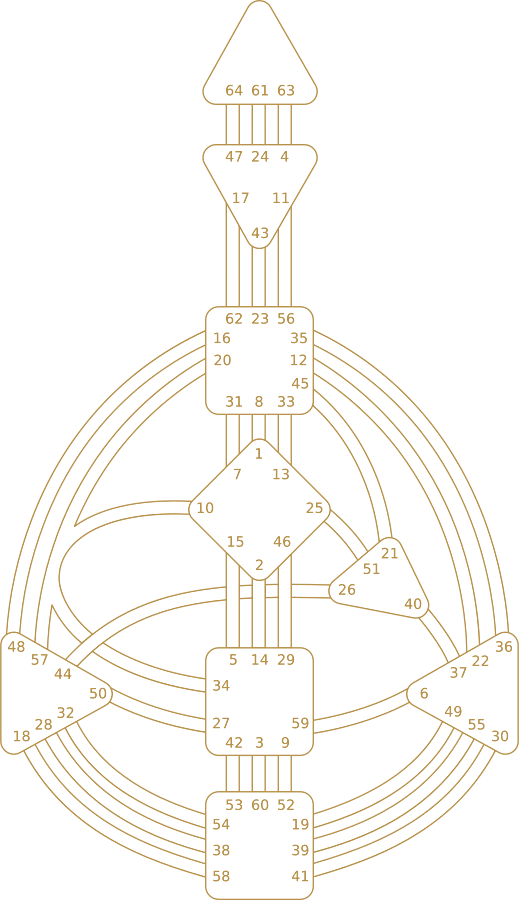

Innocence Motivation in Human Design
Innocence Motivation in Human Design is one of six Motivations, the arrow at the top right of the chart. It names a mind drawn to watching what is plainly there, without needing to act on it.
This page is for people who have Innocence Motivation on their chart, and for anyone who wonders what a word like Innocence could mean here. It covers the name, the two sides, transference, and how this Motivation can show up at work, at home and in close relationships. Start with your free chart below.
Simple way to think about it: Think of a bench beside a quiet pond: one part of your mind is content to sit there and take in what moves across the water, with no plan to join in.
What is Innocence Motivation in Human Design?
Innocence is one of the six Motivations. Motivation sits on the Personality side of the chart, the mind and what you are aware of. It is the arrow at the top right, also called Awareness. Each person has a single Motivation, and Innocence is the name of this one.
The name does not mean blameless or naive. It is a label for how attention works. A mind with Innocence Motivation tends to take things as they appear, to notice what is in front of it before building a story about it, and to be curious about what is simply there and how it unfolds.
Innocence belongs to the Spirit pair with Guilt. In this pair the mind is working with how people live and act around one another. Innocence leans toward seeing and being seen. It describes where awareness rests, not a moral position, not a mood, and not a rule about how you should act.
Innocence Motivation at a glance
| Variable | Motivation, also called Awareness, one of the four Variables. It is the arrow at the top right of the chart, on the Personality side. |
|---|---|
| The six | Fear, Hope, Desire, Need, Guilt and Innocence. |
| Pair | The Spirit pair, with Guilt. |
| Left side | Observer. The arrow points left: active, strategic and focused. |
| Right side | Observed. The arrow points right: receptive, passive and peripheral. |
| Transference | Desire, the Motivation three steps away. |
| Works with | Your Strategy and Authority. Motivation supports them and never replaces them. |
Is your Motivation Innocence? Start with your free chart
Enter your birth date, time and place. Your free chart shows your Motivation as a number beside the top right arrow.
Reading the arrows in your free chart. Four small arrows sit beside the head of the chart, each with a big number. The big number beside the top right arrow is your Motivation: 1 Fear, 2 Hope, 3 Desire, 4 Need, 5 Guilt and 6 Innocence, and the arrow shows left or right. For Innocence, left is Observer and right is Observed. Your Human Design reading names your Motivation and says which way its arrow points.
Observer and Observed: the two sides of Innocence Motivation
Innocence Motivation has two sides, called Observer and Observed. The direction of your Motivation arrow decides which one is yours. Left is active, strategic and focused. Right is receptive, passive and peripheral. Both sides are about what is seen, but one looks out and the other is aware of being looked at.
Observer (left)
The Observer side of Innocence Motivation has the arrow pointing left. Left is active, strategic and focused. In everyday terms, an observer is someone who watches on purpose. This side tends to turn its attention outward and take in what is happening with care, often holding back from stepping in. Attention is steady and deliberate. People with this side may be the ones who go quiet in a new group, watching closely, and speak once they have a clear picture of what is going on.
Observed (right)
The Observed side of Innocence Motivation has the arrow pointing right. Right is receptive, passive and peripheral. In everyday terms, observed means being the one who is watched. This side tends to be aware of how it comes across, and of what others seem to take from its words, manner and presence. Attention is wide and takes in the room. People with this side often feel the effect of being noticed, and they may adjust without meaning to when the mood around them changes.
When Innocence slips into Desire: transference
Transference means the mind has been conditioned away from its own Motivation and is running on the one three steps away. For Innocence, that is Desire. Desire is not lesser, it simply is not yours. It can look like attention turning toward what to pursue or lead, rather than what is simply there to be seen. To notice it, ask whether the push to act comes from your own curiosity or from the people nearby. Return gently to what you can plainly see.
Read the Desire Motivation guide to see what that lens looks like when it is someone's own.
Why Innocence Motivation can surprise you
Innocence can sound like a claim about character, as if it were a judgment about a person. In Human Design it only names what moves the mind, with no verdict attached. Other sites may use different words for it, which adds to the confusion. To test it gently, spend a week noticing how often your attention rests on simply seeing what is going on before doing anything. If that is your steady pattern, the name may fit.
What Innocence Motivation tends to ask about
Someone with Innocence Motivation tends to ask about what is actually happening. You may talk about what you saw, what stood out, and how a scene or conversation felt to be in. You often want to understand things as they are, before anyone attaches a story. Others may find you calm or hard to read. You may also notice how aware you are of the way people take you in, and how much you learn from simply being present.
Try it this week
Innocence Motivation at work
At work, Innocence Motivation often shows up as a talent for taking in the whole scene. In meetings you may be quiet at first, then offer a plain account of what everyone has said and where things stand. You may notice a change in the room that others miss. Learning tends to go well when you can watch a task done before you try it yourself.
When work asks for the opposite, such as speaking up right away or pitching on the spot, try asking for a little time to take things in. A short note afterward often says what you saw more clearly than a rushed comment would. Let colleagues know that being quiet is how you gather information, so your silence is not mistaken for lack of interest.
Innocence Motivation at home
At home, Innocence Motivation can show up as a pull toward simple, unhurried time. You may like a seat with a good view of the room, or a quiet hour to watch the day go by. Your space tends to feel right when it leaves room for noticing, with fewer demands to perform. Try setting aside a short stretch each day with no task and no screen. You do not need to fill every moment with plans for it to count.
Innocence Motivation in relationships and family
With a partner, friend or family member whose Motivation is different, the contrast shows in how each of you engages. Your watching may look like distance to someone who runs on a more active Motivation, and their push to act may feel like pressure to you. Neither is wrong. Try saying what you have been noticing and ask what they are drawn to. Being understood tends to help more than trying to match their pace.
Decisions and plans
Innocence Motivation colors how you weigh choices by keeping your attention on what is actually in front of you. You may want to watch a situation unfold before judging it, and that gives you a clear read on the facts. It is not the decision itself. Your Strategy and Authority still guide the choice, and Innocence helps you see the situation plainly while you wait for an answer that is truly yours.
When you feel off track
You may be running on someone else's Motivation if you feel pushed to chase or direct things you would rather watch, or if you are acting from what others seem to want. Pause and ask what you can plainly see right now. Name two or three things, then check them against your own sense. If the push to act eases, you are likely closer to your own Innocence Motivation.
Fear, Guilt and the other Motivation names describe what moves the mind; they are not feelings to fix. If fear, guilt or worry is weighing on you, talk with someone you trust or a licensed professional.
Innocence Motivation by Type
Your Type and its Strategy come first. Here is how each Type can work with Innocence Motivation day to day.
Innocence Motivation for a Generator
Strategy: To respond. A Generator with Innocence Motivation may watch quietly while the energy for a task builds. Let that watching show you what is there, and let your Authority say which things deserve your effort.
Innocence Motivation for a Manifesting Generator
Strategy: To respond, then inform before acting. A Manifesting Generator with Innocence Motivation may move fast and still take a plain look first. Let that look steady the pace, while Authority, not the urge to dive in, decides direction.
Innocence Motivation for a Projector
Strategy: Wait for the invitation. A Projector with Innocence Motivation may read a room or a team with unusual clarity. Take it in first, and wait to be asked before you tell anyone what you saw.
Innocence Motivation for a Manifestor
Strategy: Inform before you act. A Manifestor with Innocence Motivation may watch before moving. That quiet attention can shape how you tell others what you plan to do, so nobody mistakes your calm for distance.
Innocence Motivation for a Reflector
Strategy: Wait a lunar cycle. A Reflector with Innocence Motivation may mirror what the people and places around them are showing. Give yourself time to notice what feels like yours and what was picked up from the scene, and let choices wait before treating a view as your own.
What people with Innocence Motivation often hear
All six Human Design Motivation guides
Each one has its own guide. The Human Design Motivation overview explains how they fit together.
Next steps
Run your free chart for your Type, Strategy and Authority, then spend a week noticing where your mind goes first. Keep your Strategy and Authority first, and let your Motivation add detail to them.
FAQ: Innocence Motivation in Human Design
What is Innocence Motivation in Human Design?
Innocence is one of six Motivations, shown by the arrow at the top right of the chart on the Personality side. It names what moves the mind: attention resting on what is plainly there, seeing it clearly before adding a story.
What is the difference between Observer and Observed in Innocence Motivation?
The arrow direction decides it. Observer is the left side, active and focused, watching with care. Observed is the right side, receptive and peripheral, aware of how it comes across and of what others take in.
How do I know if my Motivation is Innocence?
Start with your free chart, which gives you your Type, Strategy and Authority. A Human Design reading has a section that names your Motivation and says which way your Motivation arrow, at the top right of the chart, points. If it is Innocence, an arrow pointing left means the Observer side and an arrow pointing right means the Observed side.
What is transference in Innocence Motivation?
Transference is the not-self pattern. When the mind is conditioned away from its own Motivation, it tends to run on the one three steps away. For Innocence, that is Desire. It is something to notice without judgment, not a flaw.
Does Innocence Motivation make me quiet or shy?
Not necessarily. Innocence describes where attention rests, not how much you speak. Some people with it are talkative and still take in the scene first. Quiet is one way it can look, not a rule, and your Strategy and Authority guide what you do.
Is Innocence Motivation a feeling?
No. Innocence names what moves the mind, not an emotion or a moral state. It is not a statement about your character. It describes where awareness tends to rest: on what is plainly there to be seen.