

Finding Your People When You Do Not Fit the Room
Finding Your People When You Do Not Fit the Room
You leave the event having said the right things to the right number of people, and feel worse than when you arrived.
Everyone else seems to have got something from it.
Why a room costs you more than it costs them
Start with the mechanics, because they explain most of it.
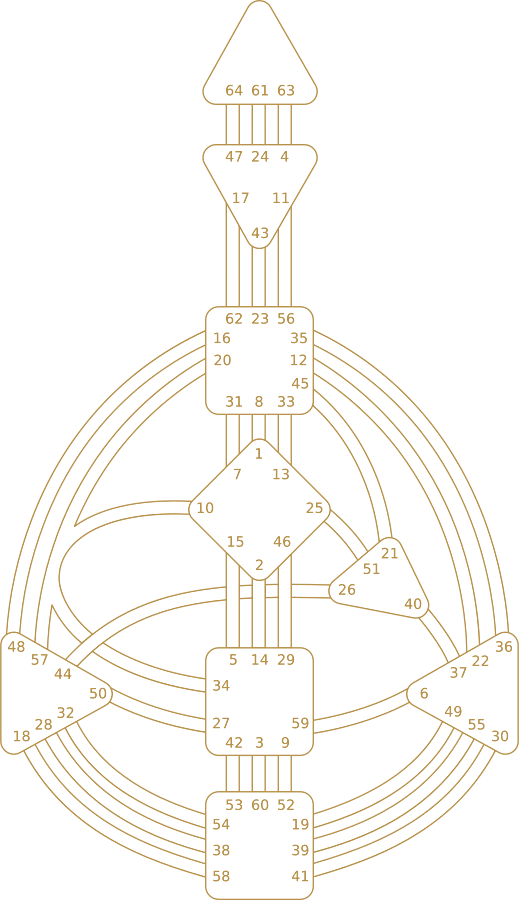
If several of your centers are open, you take in and amplify every person present. Forty people is forty people's worth of work, and none of it shows.
So two people go to the same evening and have completely different nights. The tired one usually decides something is wrong with them.
Nothing is. They just did more work.
Some people leave a party having talked. Some leave having processed everyone in the room.
How each Type lands on a group
Before you speak, your aura has already done something. That sounds vague. The effects are not.
Generators. Open and enveloping. People come to you. Which is why a Generator often ends up as the one everyone talks at, and leaves full of other people's news.
Projectors. Focused and absorbing. You see one person clearly rather than working a room. That is the wrong shape for most parties and exactly right for one long conversation in a corner.
Manifestors. Closed and repelling, which sounds worse than it is. People find you slightly hard to read and often keep a small distance. Manifestors get told they seem intimidating and have no idea why.
Reflectors. Sampling. You take on the character of the group, which makes you a very good read on whether a room is healthy, and a poor judge of yourself while you are in it.
Why searching harder does not work
The usual advice is to join more things.
For a Projector that is close to the worst possible strategy, because it means more rooms where nobody has recognized you, more effort, more drain, and the bitterness that follows.
The alternative is not sitting at home. It is being findable rather than searching. Clear about what you do, visible where the people who would want you already are, and specific enough that they can spot you.
That is slower, and it is a completely different activity from networking.
What good actually looks like
Smaller than most people are aiming for.
Two or three people who get it will do more for you than a community of two hundred. This is especially true with open centers, because a big group is a lot of absorbed energy however much you like everyone in it.
They also tend to arrive one at a time rather than as a group. Most people's actual circle assembled slowly and in ones.
Worth noticing which is which. There are groups you belong to and groups you attend, and confusing the two costs a lot of evenings.
Where people actually meet people
Not at events designed for meeting people. That is the awkward finding.
Most durable connections come from doing something alongside someone, repeatedly, where the point was the thing rather than the connection. A class, a project, a job, a regular fixture.
It works because it removes the performance. Nobody is assessing whether this is going well. You are both looking at the same third thing, and the relationship forms sideways.
For anyone with open centers this is also cheaper. A shared activity gives you something to point your attention at, rather than a room to absorb.
The recognition problem, specifically
Worth separating out, because Projectors carry a version of this that the other Types do not.
Being liked is not the same as being seen. A Projector can be well liked in a group for years and still be quietly bitter, because nobody has recognized what they actually bring.
That is not vanity. It is the mechanism. Work and connection both land differently for a Projector depending on whether the other person had already noticed them.
Which means the useful question is not who likes me. It is who has actually asked me for something, and are those the rooms I keep going back to.
The version of this that is not about design
Worth saying, because loneliness is not a chart problem.
If you are genuinely isolated, if it has gone on a long time, or if it is heavier than open centers can explain, that is worth taking to a person rather than a page. A doctor, a therapist, or someone you trust.
Human Design can explain why a crowded room is expensive for you. It cannot replace company, and it should not make being alone sound like a design feature when it is actually a problem.
Understanding why rooms are tiring is useful. It is not the same as having people.
Where to go from here
- Generate your free chart
- Read about the five Types
- Environment, which affects which rooms work for you
- Why some places feel right and others do not
- Boundaries for open centers
Frequently asked questions
Why do I feel like an outsider in most groups?
Open centers take in and amplify the energy of a group, so a room can feel overwhelming without anything being wrong. Projectors and Reflectors in particular are not built to blend into large groups on the same terms as everyone else.
What is an aura in Human Design?
Each Type has a different way of meeting other people. Generators are enveloping, Projectors focused and absorbing, Manifestors closed and repelling, Reflectors sampling. It describes how you land on a room before you speak.
How do you find people who understand you?
Human Design suggests being findable rather than searching. Being clear about what you actually do and where you actually are tends to work better than joining more groups, particularly for Projectors, who wait for the invitation.
Want to go deeper?
A free chart shows your Type and which centers are open. How you specifically meet other people is covered properly in a reading.
Get your personalized Human Design reading: 60+ sections written from your exact chart, all 27 workbooks, 40 meditations, a 24-lesson course, two recordings, a Self-Discovery Notebook, and Jessica, an AI guide who knows your design. Yours for life.