
Human Design vs Astrology | Key Differences
On this page
If you've looked into Human Design, there's a good chance you came from astrology. Maybe you've been reading your birth chart for years. Maybe you know your rising sign, your moon sign, and your Saturn return inside and out. And then someone mentioned Human Design, and your first thought was: isn't this just astrology with extra steps?
Human Design and astrology start with the same birth data, but they answer completely different questions about who you are.
It's a fair question. Both systems use your birth date, time, and location. Both generate a chart. Both claim to reveal something about how you operate. But what each system actually does with that information, and what it gives you in return, is where the two paths split.
This post breaks down the real differences between Human Design and astrology. Not to say one is better than the other, but to help you understand what each system offers so you can decide which one serves you right now.
New here? Start by generating your chart: Generate your free Human Design chart.
They Start in the Same Place
Both Human Design and astrology require the same three inputs: your birth date, your exact birth time, and your birth location. That's where the overlap begins and, honestly, where most of it ends.
Astrology takes those inputs and maps the positions of planets across 12 zodiac signs and 12 houses. The result is a natal chart, a circular diagram that describes your personality tendencies, emotional patterns, relationship dynamics, and the timing of major life events.
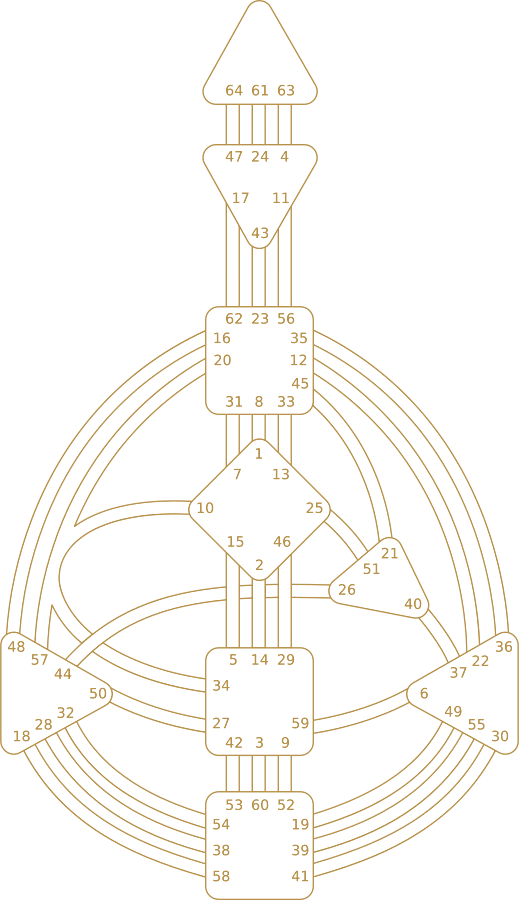
Human Design takes those same inputs and runs them through a different framework. It maps planetary positions to 64 hexagrams from the I Ching, which correspond to 64 Gates in your BodyGraph chart. Those Gates activate specific energy centers and channels, which determine your Type, Strategy, and Authority.
Same starting point. Completely different destination.
What Astrology Tells You
Astrology is, at its core, a system of personality and timing. Your natal chart describes who you are in terms of traits, tendencies, and emotional patterns. Your sun sign reflects your identity. Your moon sign reflects your emotional world. Your rising sign shapes how you present yourself to others.
Beyond personality, astrology tracks planetary cycles. Transits, progressions, and returns give you a sense of when things are likely to shift. Saturn return. Jupiter conjunctions. Mercury retrograde. Astrology gives you a map of what's happening and when.
This makes astrology powerful for self-reflection, emotional understanding, and recognizing patterns across time. If you want to understand why you feel the way you feel, or what themes are active in your life right now, astrology is built for that.
What Human Design Tells You
Human Design is not a personality system. It doesn't describe your traits or predict your future. Instead, it gives you a mechanical framework for how your energy works and how you're designed to make decisions.
Astrology tells you who you are. Human Design tells you how to operate.
When you generate your Human Design chart, the first thing you'll see is your Type. There are five Types in Human Design: Generator, Manifesting Generator, Projector, Manifestor, and Reflector. Your Type tells you how your energy works and how you're designed to interact with the world around you.
From there, your Strategy gives you a specific way to move through life with less resistance. And your Authority shows you how to make decisions that are correct for you. Not based on logic alone, not based on what other people think, but based on the specific decision-making process your body is wired for.
Human Design also maps your defined and undefined energy centers, your Profile, your Gates, and your Channels. Each of these adds detail and depth. But the foundation always comes back to Type, Strategy, and Authority.
The Core Difference: Knowing vs Doing
Here's the simplest way to think about it. Astrology gives you self-knowledge. Human Design gives you a decision-making framework.
Astrology says: here's who you are, here's what you're working through, here's when things will shift. Human Design says: here's how your energy works, here's how to make correct decisions, and here's what happens when you don't.
In astrology, you might learn that your moon is in Scorpio, which explains why you feel things so deeply. That's a valuable insight. In Human Design, you might learn that you have Emotional Authority, which means you should never make major decisions in the heat of the moment. That's a practical instruction.
Astrology helps you understand your patterns. Human Design gives you a way to work with them.
This doesn't make one better than the other. They serve different purposes. But it does mean that people who are drawn to one system often find real value in the other, because they fill different gaps.
Where They Overlap (and Where They Don't)
Human Design does incorporate elements from astrology. The planetary positions in your BodyGraph come from the same ephemeris data that astrologers use. You'll see the Sun, Moon, Mercury, Venus, Mars, Jupiter, Saturn, Uranus, Neptune, and Pluto in your Human Design chart, just like you would in a natal chart.
But Human Design also draws from three other systems: the I Ching (the Chinese Book of Changes), the Kabbalah Tree of Life, and the Hindu-Brahmin Chakra system. These four systems are layered together to create the BodyGraph, which is the map that Human Design uses to describe how you operate.
So while astrology is one of the ingredients, Human Design is a different recipe entirely. You won't find zodiac signs in your BodyGraph. You won't find houses or aspects. And you won't find predictions about what's coming next month. What you will find is a clear picture of how your energy moves, where you're consistent, where you're open to outside influence, and how you make decisions that are correct for you.
Can You Use Both?
Absolutely. Many people do. These two systems don't conflict with each other because they're answering different questions.
Astrology is useful for reflection. It helps you understand emotional patterns, life themes, and timing. It's especially powerful during transitions, when you want to understand what a particular period of life is about.
Human Design is useful for action. It gives you a framework for making decisions, managing your energy, and reducing the friction that comes from operating in a way that doesn't match how you're wired.
If you already know your astrology chart well, generating your Human Design chart will give you an entirely different lens. Where astrology might tell you that you're naturally independent, Human Design might show you that you're a Projector, designed to wait for the invitation before stepping in. Both are true. Both are useful. They just operate on different layers.
Which One Should You Start With?
If you want to understand your personality, emotional patterns, and the timing of your life, start with astrology. There are decades of resources, communities, and practitioners built around it.
If you want a practical framework for how to make decisions, use your energy, and move through life with less resistance, start with Human Design. The entry point is your Type, Strategy, and Authority, and you can explore from there.
If you're the kind of person who wants both self-knowledge and a practical system for applying it, use both. Start wherever you feel pulled. There's no wrong door.
The question isn't which system is right. It's which question you're trying to answer right now.
Frequently Asked Questions
What is the difference between Human Design and astrology?
Human Design uses your birth date, time, and location to generate a BodyGraph chart that maps your energy Type, Strategy, and Authority. Astrology uses the same birth data to map planetary positions across 12 zodiac signs and houses. Human Design focuses on decision-making and energy mechanics, while astrology focuses on personality traits, timing, and life themes.
Is Human Design based on astrology?
Human Design incorporates elements from astrology, including planetary positions at the time of birth. However, it also draws from the I Ching, the Kabbalah Tree of Life, the Hindu-Brahmin Chakra system, and quantum physics. The result is a separate system with a different structure, different outputs, and a different purpose than astrology alone.
Can you use Human Design and astrology together?
Yes. Many people use both systems. Astrology offers insight into personality, timing, and life cycles. Human Design offers a practical framework for decision-making and energy management. They answer different questions and can complement each other without conflicting.
Which is more accurate, Human Design or astrology?
Accuracy depends on what you are looking for. Astrology is stronger for understanding personality themes, timing, and emotional patterns. Human Design is stronger for understanding how you make decisions, how your energy operates, and how to reduce resistance in daily life. Neither replaces the other.
Do Human Design and astrology use the same birth information?
Yes. Both systems require your birth date, exact birth time, and birth location. However, they process that information differently. Astrology plots planets across zodiac signs and houses. Human Design maps planetary activations to 64 Gates based on the I Ching, which then define your energy centers, channels, and Type.
Want to go deeper? Get your personalized Human Design reading, 60+ sections written for your exact chart, a Self-Discovery Notebook, two MP3 recordings, and your personal AI guide Jessica. Yours forever.
Continue Your Journey
